
Boxer
Also known as: German Boxer, Deutscher Boxer
Energy Level
Apartment Friendly
Weight (Male)
65–80 lbs (29–36 kg)
Height (Male)
23–25 inches (58–63 cm)
Quick Facts
Coat Colors
Breed Summary
The Boxer is the ultimate family fun dog—a muscular, athletic guardian with the heart of a clown and the soul of a puppy that never quite grows up. Known for their distinctive square head, expressive face, and boundless energy, Boxers are among the most versatile and beloved breeds in the world.
Developed in 19th-century Germany from the now-extinct Bullenbeisser (bull biter), the Boxer was bred for bull-baiting, hunting large game, and later as a guard and working dog. Today's Boxer retains the athletic build and courage of its ancestors while adding a playful, affectionate temperament that makes it an outstanding family companion.
Boxers are famous for their patience with children, their protective instincts, and their exuberant, bouncy approach to life. They remain puppy-like well into their senior years, bringing joy and laughter to every household fortunate enough to include one.
History
The Boxer was developed in late 19th-century Germany from the Bullenbeisser, a Mastiff-type dog used for hunting bear, boar, and deer. Breeders crossed Bullenbeissers with smaller English Bulldogs to create a more refined, agile dog. The modern Boxer was established by the 1890s and the first Boxer club was founded in Munich in 1895.
The breed got its name from its characteristic play style—Boxers stand on their hind legs and "box" with their front paws during play. During World War I, Boxers served as messenger dogs, guard dogs, and pack carriers. American soldiers brought them home after WWII, sparking the breed's popularity in the United States.
The AKC recognized the Boxer in 1904, and the breed has remained in the top 15 most popular breeds for decades. Boxers have excelled as police dogs, military dogs, guide dogs, therapy dogs, and competitive athletes.
Appearance
The Boxer is a medium-to-large, short-haired dog with a strong, muscular, and square-built body. Males stand 23-25 inches and weigh 65-80 pounds; females are 21.5-23.5 inches and 50-65 pounds. The body is compact with a broad, deep chest and well-defined musculature.
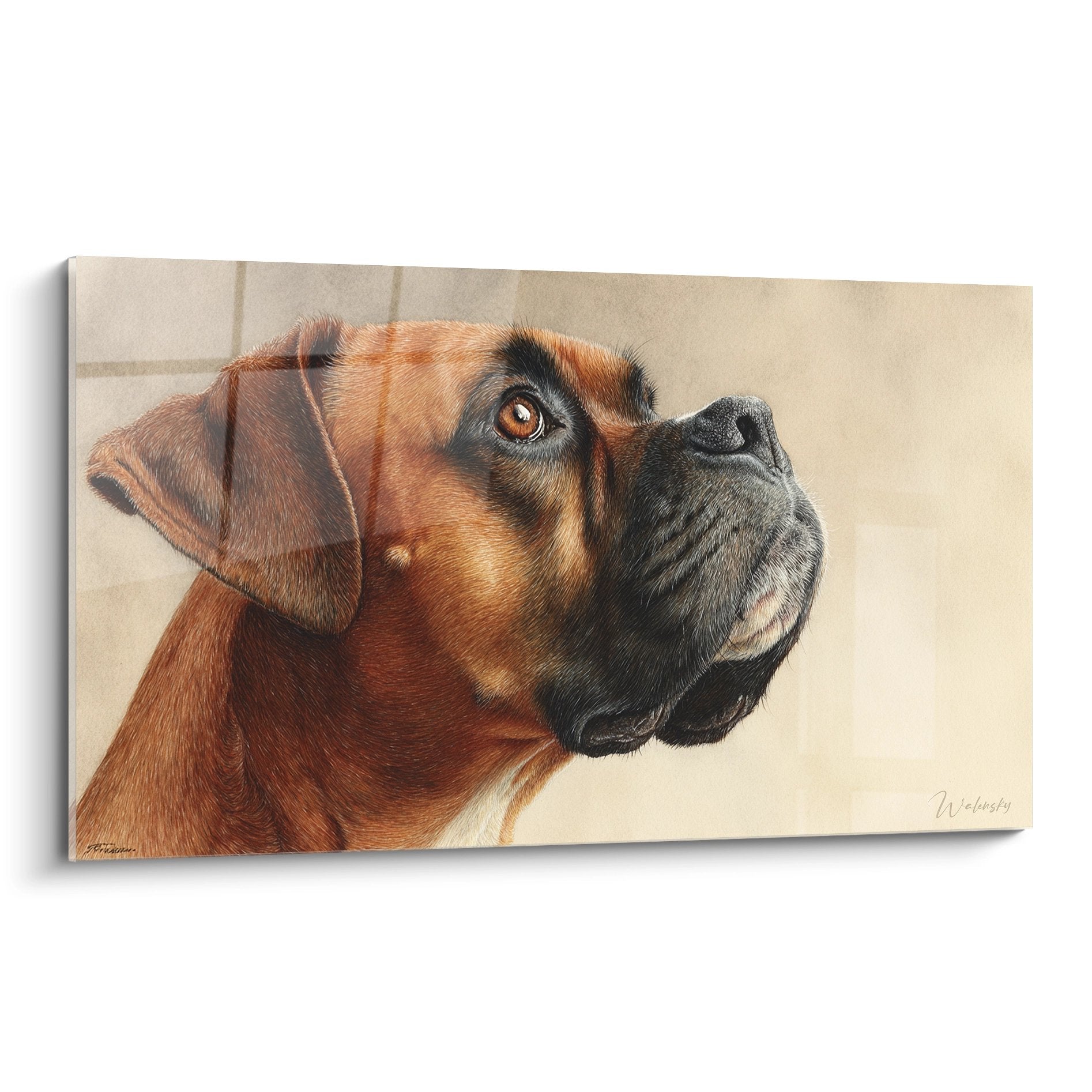
The head is the Boxer's most distinctive feature—broad and blunt with a short, wide muzzle, pronounced stop, and slightly undershot jaw. The lower jaw protrudes beyond the upper jaw, giving the breed its characteristic expression. Eyes are dark brown, expressing alertness and intelligence. Ears are set high; they may be cropped (upright) or left natural (folded).
The coat is short, tight-fitting, and shiny—requiring minimal grooming. Accepted colors are fawn (ranging from light tan to dark mahogany) and brindle (fawn with black stripes). White markings are common and acceptable. White Boxers exist but are not accepted for show.
Temperament
Boxers are the eternal puppies of the dog world—playful, energetic, and joyful well into old age. They are famously affectionate, often described as "Velcro dogs" who insist on being in constant physical contact with their people. Boxers will lean against you, sit on your feet, and attempt to climb into your lap regardless of their 70-pound frame.
Their protective instincts are strong but balanced. Boxers are naturally watchful and will position themselves between their family and perceived threats. However, well-socialized Boxers are not aggressive—they assess situations and react proportionally. Their courage is unquestionable, but so is their good judgment.
Boxers are also remarkably patient and gentle with children, earning them the nickname "the nanny dog." Their playful energy matches perfectly with active kids, and their tolerance for being hugged, climbed on, and generally mauled by small children is legendary.
Personality Around Others
Boxers are outstanding with children—patient, protective, and always ready to play. They are one of the most recommended breeds for families with kids of all ages. Other dogs are generally well-received, though some Boxers can be assertive. Same-sex aggression is possible but less common than in some working breeds. Cats are usually accepted. Strangers are assessed before being welcomed—Boxers are discerning but not aggressive toward people.
Exercise Needs
Boxers are high-energy dogs that need 60-90 minutes of daily exercise. They excel at running, fetch, agility, and interactive play. IMPORTANT: Boxers are brachycephalic (short-muzzled), so avoid exercise in heat and humidity. They overheat faster than longer-muzzled breeds. Indoor play and training sessions can supplement outdoor exercise in hot weather. Mental stimulation through puzzle toys and training is essential—a bored Boxer is a destructive Boxer.
Training
Boxers are intelligent and eager to please, making them responsive to positive reinforcement training. They mature slowly (often not fully mentally mature until age 3), so patience is required. Short, fun training sessions work best—Boxers lose interest in repetitive drills. They excel at obedience, rally, and agility. Socialization is important to channel protective instincts appropriately. Harsh corrections are counterproductive with sensitive Boxers.
Grooming
Boxer grooming is minimal. Brush weekly with a rubber curry brush or hound mitt. They shed moderately. Bathe every 4-6 weeks. Clean facial wrinkles regularly (though less pronounced than Bulldogs). Dental care is important, as is nail trimming every 2-3 weeks. Boxers are generally clean dogs with minimal odor.
Health
Common Health Conditions
Cancer is the Boxer's most significant health concern—the breed has one of the highest cancer rates among all dog breeds, with lymphoma, mast cell tumors, and brain tumors being most common. Heart conditions, particularly ARVC (Boxer Cardiomyopathy) and aortic stenosis, are serious concerns requiring screening. Bloat is a life-threatening risk. Despite these predispositions, many Boxers live healthy lives to 10-12 years with proper preventive care.
Recommended Health Tests
- Hip Evaluation
- Cardiac Exam (including Holter monitor for ARVC)
- Thyroid Evaluation
- Elbow Evaluation
- Degenerative Myelopathy DNA Test
- ARVC DNA Test
Average Annual Vet Cost
$500–$1,000
Nutrition
Adult Boxers need 1,400-1,800 calories daily depending on activity. High-quality protein supports their muscular build. Feed twice daily to reduce bloat risk. Avoid exercise before and after meals. Many Boxers have sensitive stomachs—grain-free or limited ingredient diets may help (consult vet about DCM concerns). Puppies should eat large-breed puppy food for controlled growth. Maintain lean body condition to reduce cancer and joint disease risk.
Living Environment
Boxers need a house with a yard and space to play. They can adapt to apartments if given adequate exercise but their energy level makes houses preferable. Securely fenced yard is important. CRITICAL: Boxers are very heat-sensitive and need air conditioning in warm climates. They also don't tolerate extreme cold due to their short coat. They are indoor dogs that should live with their family.
Ideal Family
Boxers are ideal for active families with children. Their patience, energy, and protective nature make them outstanding family dogs. Active couples and singles who enjoy outdoor activities will love having a Boxer companion. They suit experienced and first-time owners who are committed to exercise and training. NOT ideal for: sedentary owners, extremely hot climates without AC, or people away from home all day.
Intelligence
Boxers rank around 48th in obedience intelligence, but their actual cognitive ability is much higher. Their lower ranking reflects their slow maturity and playful nature rather than limited intelligence. Boxers are problem-solvers, excellent at reading human emotions, and quick learners when motivated. Their working intelligence in police, military, and service roles demonstrates capabilities far beyond their obedience ranking.
Barking
Frequency
Alert
Separation
Quiet Indoors
Boxers are moderate barkers. They alert to visitors and unusual sounds with a deep, authoritative bark. They are not yappy dogs but will vocalize during play and when excited. Some Boxers develop excessive barking from boredom.
Shedding
Year-Round
Seasonal
Vacuum Factor 🧹
Hypoallergenic
Boxers shed moderately. Their short coat produces noticeable but manageable shedding. Regular brushing with a rubber curry brush keeps shedding under control. Not as intense as double-coated breeds.
Weather Tolerance
☀️
Heat
❄️
Cold
🌧️
Rain
🌨️
Snow
💧
Humidity
Breed Ratings
Fun Facts
Boxers get their name from their play style—they stand on hind legs and "box" with their front paws.
Boxers don't fully mature mentally until age 3, maintaining puppy-like behavior longer than most breeds.
A Boxer named Brandy holds the Guinness Record for the longest dog tongue—17 inches.
Boxers were among the first breeds used as police dogs in Germany.
The breed served as messenger, guard, and pack dogs in both World Wars.
Boxers are known for the "kidney bean dance"—wiggling their entire body in a U-shape when excited.
White Boxers are not albino—they simply have more white in their genetic color pattern.
A Boxer can jump several feet in the air from a standing position.
Famous Dogs
Bang Away
Westminster Best in Show 1951—helped popularize the breed in America
Brandy
Guinness World Record holder for longest tongue (17 inches)
George
Humphrey Bogart and Lauren Bacall's famous Boxer
Common Myths
"Boxers are aggressive fighting dogs."
While the breed has Bullenbeisser (bull-baiting) ancestry, modern Boxers have been bred for companionship for over a century. They are gentle, playful, and excellent with families.
"Boxers are hyperactive and unmanageable."
While energetic, Boxers calm down with proper exercise and training. They mature slowly but become balanced, well-mannered adults.
"White Boxers are all deaf."
While white Boxers have a higher incidence of deafness (about 18%), the majority hear perfectly well. They are not inherently unhealthy.
Frequently Asked Questions
Are Boxers good family dogs?
Boxers are one of the best family dogs—patient, protective, playful, and gentle with children of all ages.
Do Boxers bark a lot?
Moderately. Boxers alert to visitors but are not nuisance barkers. They are more likely to "talk" with whines and groans.
How much exercise does a Boxer need?
60-90 minutes of daily exercise. They are high-energy dogs that need outlets for their athleticism and enthusiasm.
Are Boxers easy to train?
Moderately easy with positive methods. They are smart and willing but mature slowly and can be distracted by their own playfulness.
Do Boxers get along with other dogs?
Generally yes, especially with proper socialization. Some may be assertive with unfamiliar dogs, but aggression is uncommon.
Adoption Tips
Boxer rescues include the American Boxer Rescue Association and regional organizations. Boxers are commonly surrendered due to their high energy and slow maturity. Many rescue Boxers are wonderful dogs that simply needed more exercise than their owners could provide. Ask about health history (cardiac screening especially), energy level, and temperament with children and other animals.
Puppy Guide
Boxer puppies are bundles of boundless energy. They grow rapidly and need large-breed puppy food for controlled growth. Socialization is important but Boxers are naturally friendly. Puppy energy is intense—provide plenty of chew toys and exercise. They are slow to mature mentally—expect puppy-like behavior until age 3. Crate training helps with house training. Ears may be cropped (controversial) or left natural; discuss with your veterinarian.
Senior Care
Senior Boxers (7+) need cancer monitoring at every vet visit. Heart screening (annual echocardiogram and Holter monitor) becomes critical. Joint supplements support aging bodies. Maintain moderate exercise. Watch for degenerative myelopathy symptoms (hind-end weakness). Regular blood work monitors organ function. Many senior Boxers retain their playful spirit, which helps keep them mentally engaged.
Similar Breeds
Bullmastiff
Larger, more laid-back guardian. Less playful but equally loyal and protective.
American Staffordshire Terrier
Similar muscular build and family devotion. More terrier-like in temperament.
Doberman Pinscher
Sleeker, more athletic. Similar protective instincts but more intense working drive.
Great Dane
Much larger but similarly gentle and playful. Lower energy level.
Ownership Costs
Estimated Lifetime Cost
$14,000–$22,000
Pros and Cons
Pros
Outstanding family dog—patient and protective with children
Playful, fun-loving personality that lasts a lifetime
Loyal and deeply bonded to family
Good natural watchdog with courage
Low grooming requirements
Versatile—succeeds in work, sport, and companionship
Adaptable to first-time owners
Athletic and fun exercise partner
Cons
High cancer risk—breed-specific cancers are common
Heat and cold intolerance due to short muzzle and coat
Slow maturity—puppy behavior until age 3
High exercise needs
Can develop separation anxiety
Drooling and flatulence
Potential for cardiac conditions
May be too energetic for sedentary owners