
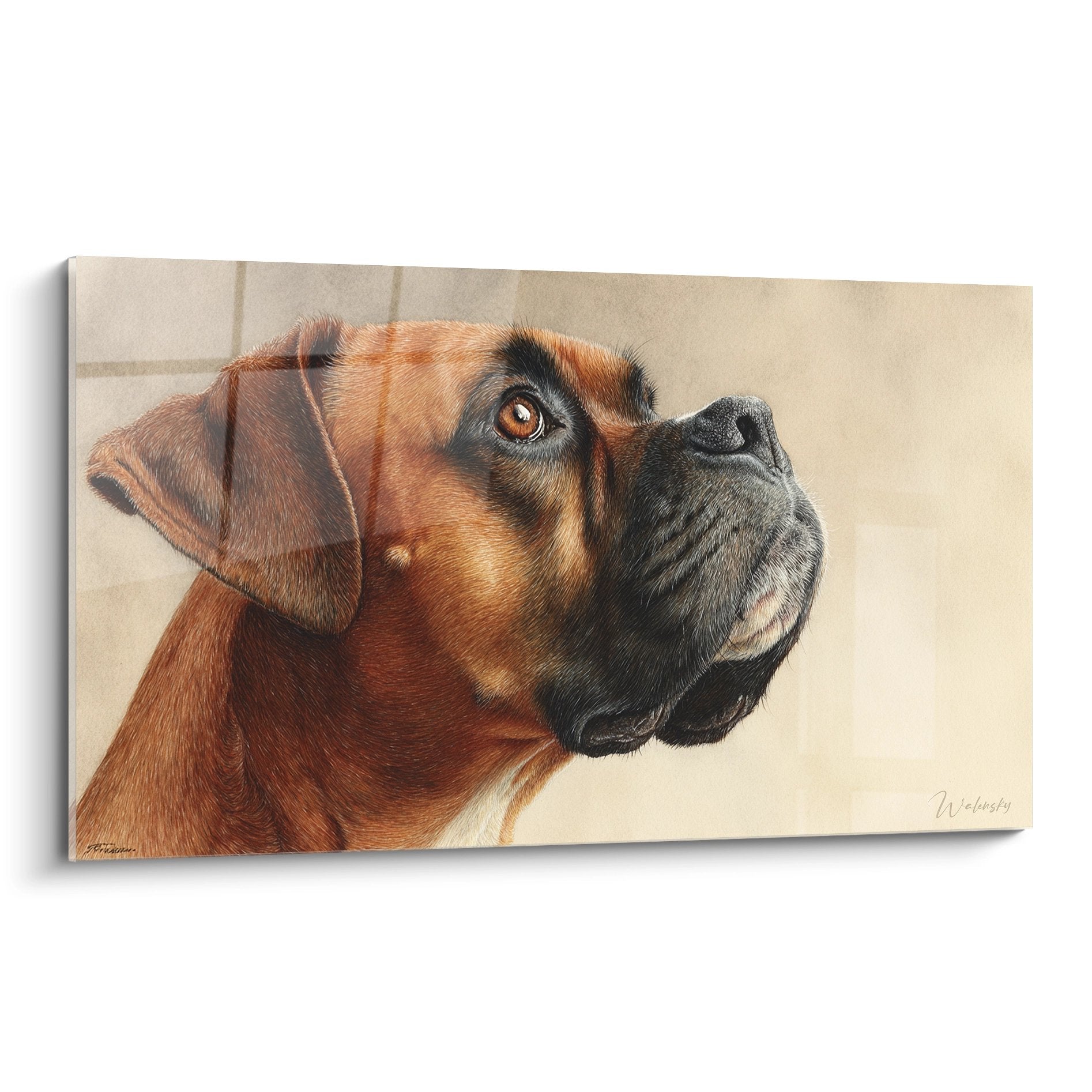
Boxer
También conocido como: German Boxer, Deutscher Boxer
Nivel de Energía
Apto Apartamento
Peso (Macho)
65–80 lbs (29–36 kg)
Altura (Macho)
23–25 inches (58–63 cm)
Datos Rápidos
Colores de Pelaje
Resumen de la Raza
El Boxer es el perro de diversión familiar por excelencia: un guardián musculoso y atlético con el corazón de un payaso y el alma de un cachorro que nunca llega a crecer del todo. Conocidos por su distintiva cabeza cuadrada, rostro expresivo y energía inagotable, los Boxers se encuentran entre las razas más versátiles y queridas del mundo.
Desarrollado en la Alemania del siglo XIX a partir del ahora extinto Bullenbeisser (mordedor de toros), el Boxer fue criado para el acoso de toros, la caza de caza mayor y, más tarde, como perro guardián y de trabajo. El Boxer actual conserva la constitución atlética y el coraje de sus ancestros, al tiempo que añade un temperamento juguetón y afectuoso que lo convierte en un compañero familiar excepcional.
Los Boxers son famosos por su paciencia con los niños, sus instintos protectores y su enfoque exuberante y alegre de la vida. Siguen comportándose como cachorros hasta bien entrada la vejez, trayendo alegría y risas a cada hogar que tiene la suerte de incluir uno.
Historia
El Boxer se desarrolló a finales del siglo XIX en Alemania a partir del Bullenbeisser, un perro de tipo Mastiff utilizado para la caza de osos, jabalíes y ciervos. Los criadores cruzaron Bullenbeissers con English Bulldogs más pequeños para crear un perro más refinado y ágil. El Boxer moderno se estableció en la década de 1890 y el primer club de Boxer se fundó en Múnich en 1895.
La raza obtuvo su nombre de su característico estilo de juego: los Boxers se paran sobre sus patas traseras y "boxean" con sus patas delanteras durante el juego. Durante la Primera Guerra Mundial, los Boxers sirvieron como perros mensajeros, perros guardianes y transportadores de carga. Los soldados estadounidenses los llevaron a casa después de la Segunda Guerra Mundial, lo que disparó la popularidad de la raza en los Estados Unidos.
El AKC reconoció al Boxer en 1904, y la raza se ha mantenido entre las 15 razas más populares durante décadas. Los Boxers han destacado como perros policía, perros militares, perros guía, perros de terapia y atletas de competición.
Apariencia
El Boxer es un perro de tamaño mediano a grande, de pelo corto, con un cuerpo fuerte, musculoso y de constitución cuadrada. Los machos miden 23-25 inches y pesan 65-80 pounds; las hembras miden 21.5-23.5 inches y pesan 50-65 pounds. El cuerpo es compacto, con un pecho ancho y profundo y una musculatura bien definida.
La cabeza es el rasgo más distintivo del Boxer: ancha y chata, con un hocico corto y ancho, un stop pronunciado y una mandíbula ligeramente prognata. La mandíbula inferior sobresale más allá de la mandíbula superior, lo que le da a la raza su expresión característica. Los ojos son de color marrón oscuro, expresando alerta e inteligencia. Las orejas son de inserción alta; pueden estar recortadas (erguidas) o dejarse al natural (caídas).
El pelaje es corto, liso y brillante, y requiere un mantenimiento mínimo. Los colores aceptados son el leonado (fawn, que va desde el canela claro hasta el caoba oscuro) y el atigrado (brindle, leonado con rayas negras). Las marcas blancas son comunes y aceptables. Existen Boxers blancos, pero no se aceptan para exhibición.
Temperamento
Los Boxers son los eternos cachorros del mundo canino: juguetones, enérgicos y alegres hasta bien entrada la vejez. Son famosamente afectuosos, a menudo descritos como "perros de velcro" que insisten en estar en constante contacto físico con su gente. Los Boxers se apoyarán contra ti, se sentarán sobre tus pies e intentarán subirse a tu regazo sin importar su estructura de 70-pound.
Sus instintos protectores son fuertes pero equilibrados. Los Boxers son naturalmente vigilantes y se posicionarán entre su familia y las amenazas percibidas. Sin embargo, los Boxers bien socializados no son agresivos: evalúan las situaciones y reaccionan proporcionalmente. Su coraje es incuestionable, pero también lo es su buen juicio.
Los Boxers también son notablemente pacientes y gentiles con los niños, lo que les ha valido el apodo de "perro niñera". Su energía juguetona encaja perfectamente con niños activos, y su tolerancia a ser abrazados, trepados y, en general, mimados por niños pequeños es legendaria.
Personalidad con Otros
Los Boxers son excepcionales con los niños: pacientes, protectores y siempre listos para jugar. Son una de las razas más recomendadas para familias con niños de todas las edades. Por lo general, reciben bien a otros perros, aunque algunos Boxers pueden ser asertivos. La agresión hacia perros del mismo sexo es posible, pero menos común que en algunas razas de trabajo. Los gatos suelen ser aceptados. Los extraños son evaluados antes de ser bienvenidos: los Boxers son perspicaces pero no agresivos con las personas.
Necesidades de Ejercicio
Los Boxers son perros de alta energía que necesitan de 60-90 minutes de ejercicio diario. Destacan en el running, el juego de buscar y traer, la agilidad y el juego interactivo. IMPORTANTE: Los Boxers son braquicéfalos (de hocico corto), por lo que se debe evitar el ejercicio con calor y humedad. Se sobrecalientan más rápido que las razas de hocico más largo. Las sesiones de juego y entrenamiento en interiores pueden complementar el ejercicio al aire libre en climas cálidos. La estimulación mental a través de juguetes de rompecabezas y entrenamiento es esencial: un Boxer aburrido es un Boxer destructor.
Entrenamiento
Los Boxers son inteligentes y ansiosos por complacer, lo que los hace receptivos al entrenamiento con refuerzo positivo. Maduran lentamente (a menudo no maduran mentalmente por completo hasta los 3 años), por lo que se requiere paciencia. Las sesiones de entrenamiento cortas y divertidas funcionan mejor: los Boxers pierden el interés en los ejercicios repetitivos. Destacan en obediencia, rally y agilidad. La socialización es importante para canalizar adecuadamente los instintos protectores. Las correcciones severas son contraproducentes con los Boxers sensibles.
Aseo
El aseo del Boxer es mínimo. Cepíllelo semanalmente con un cepillo de goma o un guante de aseo. Mudan de pelo de forma moderada. Báñelo cada 4-6 weeks. Limpie las arrugas faciales con regularidad (aunque son menos pronunciadas que en los Bulldogs). El cuidado dental es importante, al igual que el corte de uñas cada 2-3 weeks. Los Boxers son generalmente perros limpios con un olor mínimo.
Salud
Condiciones Comunes
El cáncer es la preocupación de salud más importante para el Boxer: la raza tiene una de las tasas de cáncer más altas entre todas las razas de perros, siendo el linfoma, los tumores de mastocitos y los tumores cerebrales los más comunes. Las afecciones cardíacas, en particular la ARVC (cardiomiopatía del Boxer) y la estenosis aórtica, son preocupaciones graves que requieren detección. La torsión gástrica es un riesgo potencialmente mortal. A pesar de estas predisposiciones, muchos Boxers viven vidas saludables de 10-12 years con una atención preventiva adecuada.
Pruebas de Salud Recomendadas
- Evaluación de cadera
- Examen cardíaco (incluido el monitor Holter para ARVC)
- Evaluación de tiroides
- Evaluación de codo
- Prueba de ADN para mielopatía degenerativa
- Prueba de ADN para ARVC
Costo Veterinario Anual Promedio
$500–$1,000
Nutrición
Los Boxers adultos necesitan de 1,400-1,800 calorías diarias según su actividad. Las proteínas de alta calidad respaldan su constitución musculosa. Aliméntelo dos veces al día para reducir el riesgo de torsión gástrica. Evite el ejercicio antes y después de las comidas. Muchos Boxers tienen estómagos sensibles; las dietas sin cereales o con ingredientes limitados pueden ayudar (consulte al veterinario sobre las preocupaciones de DCM). Los cachorros deben comer alimento para cachorros de razas grandes para un crecimiento controlado. Mantenga una condición corporal magra para reducir el riesgo de cáncer y enfermedades articulares.
Entorno de Vida
Los Boxers necesitan una casa con patio y espacio para jugar. Pueden adaptarse a apartamentos si se les proporciona el ejercicio adecuado, pero su nivel de energía hace que las casas sean preferibles. Un patio cercado de forma segura es importante. CRÍTICO: Los Boxers son muy sensibles al calor y necesitan aire acondicionado en climas cálidos. Tampoco toleran el frío extremo debido a su pelaje corto. Son perros de interior que deben vivir con su familia.
Familia Ideal
Los Boxers son ideales para familias activas con niños. Su paciencia, energía y naturaleza protectora los convierten en perros familiares excepcionales. A las parejas activas y a los solteros que disfrutan de las actividades al aire libre les encantará tener un Boxer como compañero. Se adaptan tanto a propietarios experimentados como a primerizos que estén comprometidos con el ejercicio y el entrenamiento. NO son ideales para: propietarios sedentarios, climas extremadamente cálidos sin aire acondicionado o personas que pasan todo el día fuera de casa.
Inteligencia
Los Boxers ocupan aproximadamente el puesto 48 en inteligencia de obediencia, pero su capacidad cognitiva real es mucho mayor. Su clasificación más baja refleja su madurez lenta y su naturaleza juguetona en lugar de una inteligencia limitada. Los Boxers resuelven problemas, son excelentes leyendo las emociones humanas y aprenden rápido cuando están motivados. Su inteligencia de trabajo en funciones policiales, militares y de servicio demuestra capacidades que van mucho más allá de su clasificación de obediencia.
Ladrido
Frecuencia
Alerta
Separación
Silencio Interior
Los Boxers son ladradores moderados. Aliertan sobre visitantes y sonidos inusuales con un ladrido profundo y autoritario. No son perros ruidosos, pero vocalizarán durante el juego y cuando estén emocionados. Algunos Boxers desarrollan ladridos excesivos por aburrimiento.
Muda de Pelo
Todo el Año
Estacional
Factor Aspiradora
Hipoalergénico
Los Boxers mudan de pelo de forma moderada. Su pelaje corto produce una muda notable pero manejable. El cepillado regular con un cepillo de goma mantiene la muda bajo control. No es tan intensa como en las razas de doble capa.
Tolerancia Climática
☀️
Calor
❄️
Frío
🌧️
Lluvia
🌨️
Nieve
💧
Humedad
Calificaciones de la Raza
Datos Curiosos
Los Boxers reciben su nombre de su estilo de juego: se paran sobre las patas traseras y "boxean" con las patas delanteras.
Los Boxers no maduran mentalmente por completo hasta los 3 años, manteniendo un comportamiento de cachorro durante más tiempo que la mayoría de las razas.
Un Boxer llamado Brandy tiene el récord Guinness de la lengua de perro más larga: 17 inches.
Los Boxers estuvieron entre las primeras razas utilizadas como perros policía en Alemania.
La raza sirvió como perros mensajeros, guardianes y de carga en ambas Guerras Mundiales.
Los Boxers son conocidos por la "danza del frijol saltarín": menean todo su cuerpo en forma de U cuando están emocionados.
Los Boxers blancos no son albinos: simplemente tienen más blanco en su patrón genético de color.
Un Boxer puede saltar varios pies en el aire desde una posición estática.
Perros Famosos
Bang Away
Westminster Best in Show 1951: ayudó a popularizar la raza en Estados Unidos
Brandy
Poseedor del récord mundial Guinness por la lengua más larga (17 inches)
George
El famoso Boxer de Humphrey Bogart y Lauren Bacall
Mitos Comunes
"Los Boxers son perros de pelea agresivos."
Aunque la raza tiene ascendencia Bullenbeisser (acoso de toros), los Boxers modernos han sido criados para la compañía durante más de un siglo. Son gentiles, juguetones y excelentes con las familias.
"Los Boxers son hiperactivos e inmanejables."
Aunque son enérgicos, los Boxers se calman con el ejercicio y el entrenamiento adecuados. Maduran lentamente pero se convierten en adultos equilibrados y educados.
"Todos los Boxers blancos son sordos."
Aunque los Boxers blancos tienen una mayor incidencia de sordera (alrededor del 18%), la mayoría oye perfectamente bien. No son inherentemente insalubres.
Preguntas Frecuentes
¿Son los Boxers buenos perros familiares?
Los Boxers son uno de los mejores perros familiares: pacientes, protectores, juguetones y gentiles con niños de todas las edades.
¿Ladran mucho los Boxers?
Moderadamente. Los Boxers alertan sobre los visitantes pero no son ladradores molestos. Es más probable que "hablen" con gemidos y quejidos.
¿Cuánto ejercicio necesita un Boxer?
De 60-90 minutes de ejercicio diario. Son perros de alta energía que necesitan salidas para su atletismo y entusiasmo.
¿Son los Boxers fáciles de entrenar?
Moderadamente fácil con métodos positivos. Son inteligentes y dispuestos, pero maduran lentamente y pueden distraerse con su propia alegría.
¿Se llevan bien los Boxers con otros perros?
Generalmente sí, especialmente con una socialización adecuada. Algunos pueden ser asertivos con perros desconocidos, pero la agresión es poco común.
Consejos de Adopción
Los rescates de Boxer incluyen la American Boxer Rescue Association y organizaciones regionales. Los Boxers suelen ser entregados debido a su alta energía y lenta madurez. Muchos Boxers de rescate son perros maravillosos que simplemente necesitaban más ejercicio del que sus dueños podían proporcionarles. Pregunte sobre el historial de salud (especialmente el examen cardíaco), el nivel de energía y el temperamento con niños y otros animales.
Guía de Cachorro
Los cachorros de Boxer son paquetes de energía inagotable. Crecen rápidamente y necesitan alimento para cachorros de razas grandes para un crecimiento controlado. La socialización es importante, pero los Boxers son amigables por naturaleza. La energía de los cachorros es intensa: proporcione muchos juguetes para masticar y ejercicio. Tardan en madurar mentalmente; espere un comportamiento de cachorro hasta los 3 años. El entrenamiento con jaula ayuda con el entrenamiento en casa. Las orejas pueden recortarse (controvertido) o dejarse al natural; discútalo con su veterinario.
Cuidado de Adulto Mayor
Los Boxers mayores (de 7+ años) necesitan control del cáncer en cada visita al veterinario. El examen cardíaco (ecocardiograma anual y monitor Holter) se vuelve crítico. Los suplementos articulares apoyan los cuerpos envejecidos. Mantenga un ejercicio moderado. Esté atento a los síntomas de mielopatía degenerativa (debilidad en los cuartos traseros). Los análisis de sangre regulares controlan la función de los órganos. Muchos Boxers mayores conservan su espíritu juguetón, lo que ayuda a mantenerlos mentalmente activos.
Razas Similares
Bullmastiff
Guardián más grande y tranquilo. Menos juguetón pero igualmente leal y protector.
American Staffordshire Terrier
Constitución muscular y devoción familiar similares. De temperamento más parecido al de un terrier.
Doberman Pinscher
Más estilizado y atlético. Instintos protectores similares pero con un impulso de trabajo más intenso.
Great Dane
Mucho más grande pero igualmente gentil y juguetón. Menor nivel de energía.
Costos de Propiedad
Costo Estimado de por Vida
$14,000–$22,000
Pros y Contras
Ventajas
Excelente perro familiar: paciente y protector con los niños
Personalidad juguetona y divertida que dura toda la vida
Leal y profundamente apegado a la familia
Buen perro guardián natural con coraje
Bajos requisitos de aseo
Versátil: destaca en el trabajo, el deporte y la compañía
Adaptable para propietarios primerizos
Compañero de ejercicio atlético y divertido
Desventajas
Alto riesgo de cáncer: los cánceres específicos de la raza son comunes
Intolerancia al calor y al frío debido al hocico y pelaje cortos
Madurez lenta: comportamiento de cachorro hasta los 3 años
Altas necesidades de ejercicio
Puede desarrollar ansiedad por separación
Babeo y flatulencias
Potencial de afecciones cardíacas
Puede ser demasiado enérgico para propietarios sedentarios