
Bullmastiff
Also known as: Gamekeeper's Night Dog
Energy Level
Apartment Friendly
Weight (Male)
110-130 lbs
Height (Male)
25-27 inches
Quick Facts
Coat Colors
Breed Summary
The Bullmastiff is a powerful, loyal guardian breed developed in 19th-century England to catch poachers. Known as the "Gamekeeper's Night Dog," they combine the power of a Mastiff with the agility of a Bulldog. Despite their imposing size, they are gentle, docile family companions.
History
Created in the 1860s by crossing Mastiffs (60%) with Bulldogs (40%) to produce a dog that could track and pin poachers without mauling them. AKC recognized in 1933.
Appearance
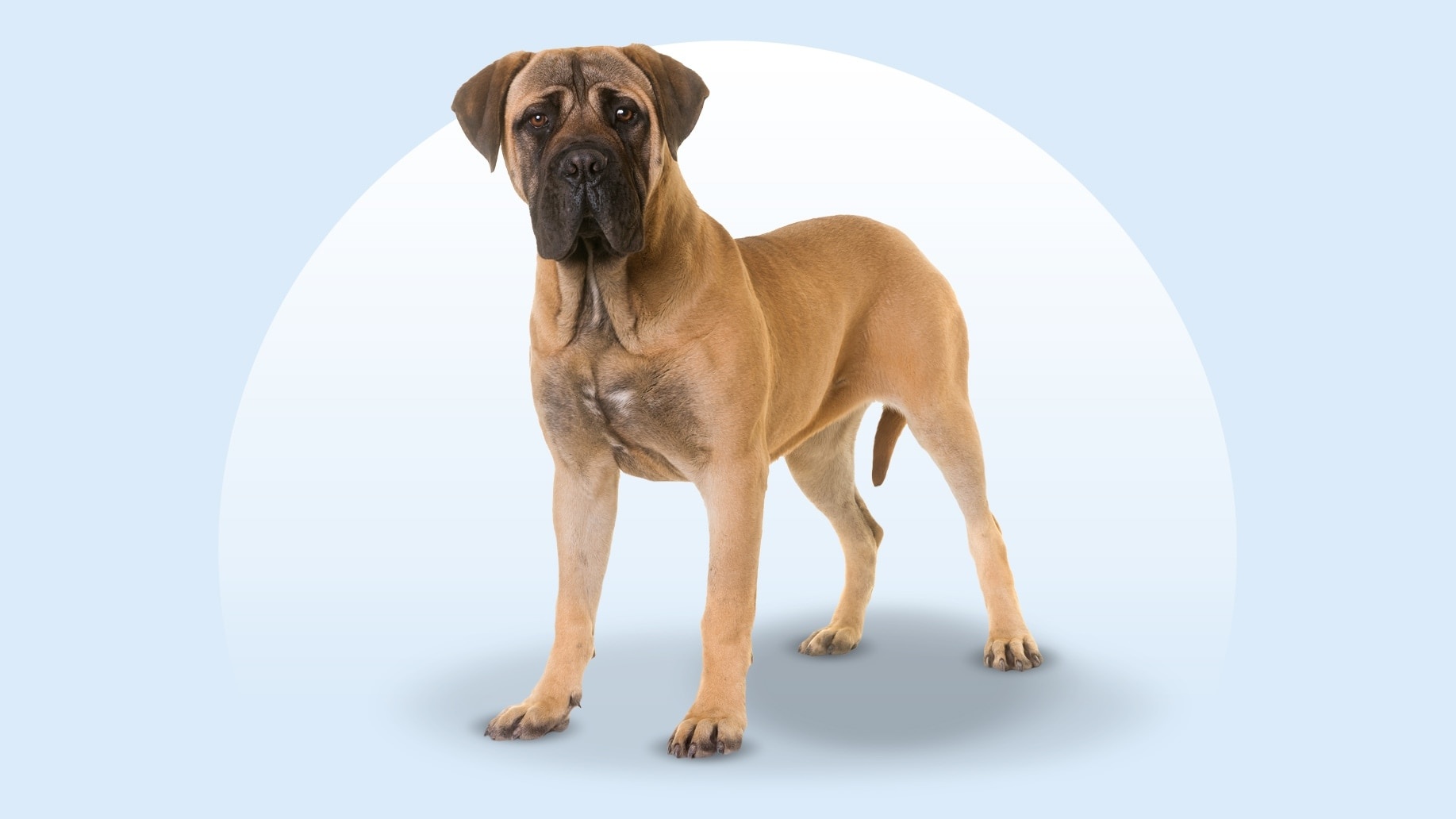
A large, powerfully built dog with a broad head, short muzzle, and muscular body. Short, dense coat. Their expression is alert and intelligent. Despite their bulk, they move with surprising agility.
Temperament
Docile, loyal, and surprisingly gentle, the Bullmastiff is a calm, reliable guardian. They are devoted to family, tolerant with children, and suspicious of strangers. They rely on their size and presence rather than aggression.
Personality Around Others
Devoted to family. Naturally protective without being aggressive. Reserved with strangers. Good with family children. Can be intolerant of other dogs, especially same-sex dogs.
Exercise Needs
Low to moderate exercise needs. Daily walks are sufficient. They are not high-energy dogs and prefer moderate activity. Avoid over-exercising in heat—they overheat easily.
Training
Moderately trainable with patience. They are intelligent but can be stubborn. Positive reinforcement with firm consistency. Early training is essential while they are still manageable in size.
Grooming
Very low-maintenance coat. Weekly brushing. Occasional baths. Regular cleaning of facial wrinkles. They drool moderately.
Health
Common Health Conditions
Prone to cancer, particularly lymphoma. Joint issues are common. Bloat can be life-threatening. Their shorter lifespan is a significant concern.
Recommended Health Tests
- Hip Evaluation
- Elbow Evaluation
- Cardiac Exam
- Thyroid Evaluation
Average Annual Vet Cost
$1,200-$2,200
Nutrition
Large breed food in two measured meals daily. Prevent bloat by avoiding exercise near meals. Proper puppy nutrition for slow growth. Monitor weight—obesity worsens joint issues.
Living Environment
Can adapt to apartments due to low energy but need space to move comfortably. Not suited for very hot climates. A home with a yard is preferred.
Ideal Family
Good for families wanting a calm, devoted protector. Experienced large-breed owners are best. Families with older children. Not ideal for first-time owners or very active households.
Intelligence
Intelligent with good judgment. They assess situations before acting, which is what made them excellent poacher-catching dogs. They are thinking dogs, not reactive.
Barking
Frequency
Alert
Separation
Quiet Indoors
Very quiet breed. They rarely bark, relying on their imposing presence instead. When they do bark, it is meaningful.
Shedding
Year-Round
Seasonal
Vacuum Factor 🧹
Hypoallergenic
Moderate shedding. Weekly brushing manages their short coat easily.
Weather Tolerance
☀️
Heat
❄️
Cold
🌧️
Rain
🌨️
Snow
💧
Humidity
Breed Ratings
Fun Facts
Bullmastiffs were trained to track, tackle, and pin poachers without biting them
The breed is 60% Mastiff and 40% Bulldog
They are sometimes called the "silent watchdog" because they rarely bark
Rocky Marciano, the undefeated heavyweight champion, owned Bullmastiffs
Famous Dogs
Swagger
The Cleveland Browns' live Bullmastiff mascot who runs onto the field before games
Common Myths
"They are aggressive guard dogs"
They are docile, gentle family dogs that use their size and presence rather than aggression
"They need lots of exercise"
They are low-energy dogs that are content with moderate daily walks
Frequently Asked Questions
Do Bullmastiffs drool a lot?
Moderately. They are not as drooly as some mastiff breeds but do drool, especially after eating and drinking.
Are they good with children?
Very good with family children—gentle and protective. Supervision is needed due to their large size.
Puppy Guide
Large puppies that need careful nutrition for proper joint development. Early socialization is critical. Start training while they are still manageable. They mature slowly.
Senior Care
Senior Bullmastiffs often develop joint and cancer issues. Provide orthopedic bedding. Gentle daily walks. Regular vet checkups are essential. Enjoy their calm, devoted companionship.
Ownership Costs
Estimated Lifetime Cost
$16,000-$24,000
Pros and Cons
Pros
Calm, gentle temperament
Excellent natural guardian
Low exercise needs
Quiet—rarely barks
Cons
Short lifespan
Prone to cancer
Can be stubborn
Drools and overheats