
Irish Wolfhound
Also known as: Cu Faoil
Energy Level
Apartment Friendly
Weight (Male)
120-180 lbs
Height (Male)
32+ inches
Quick Facts
Coat Colors
Breed Summary
The Irish Wolfhound is the tallest of all dog breeds, originally bred to hunt wolves and elk in Ireland. Despite their imposing size, they are gentle giants known for their calm, patient, and loving temperament.
History
An ancient breed dating back to 391 AD in Irish records, the Irish Wolfhound was used to hunt wolves and guard estates. The breed nearly went extinct when wolves disappeared from Ireland. Captain George Graham revived the breed in the 1860s. AKC recognized in 1897.
Appearance
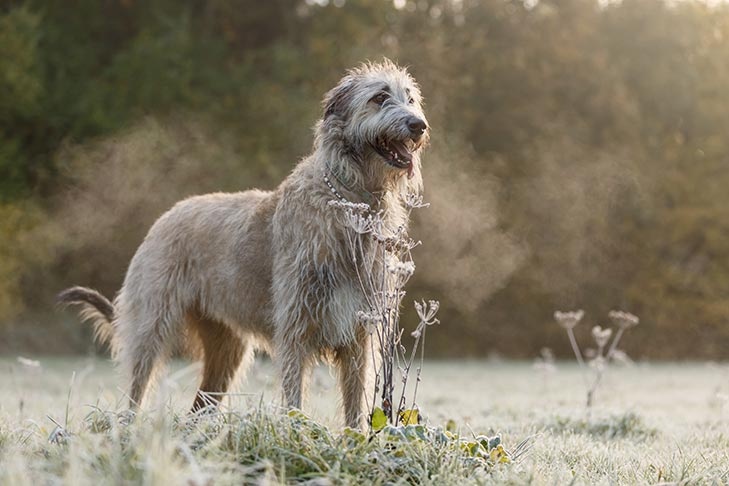
The tallest of all dog breeds, standing at least 30 inches at the shoulder and often taller. A rough, wiry coat, muscular build, and a commanding presence. Despite their size, they move with surprising grace.
Temperament
Gentle, patient, and incredibly sweet-natured, the Irish Wolfhound is the epitome of a gentle giant. They are dignified but not aggressive, courageous but not quarrelsome. Their calm demeanor belies their formidable size.
Personality Around Others
Friendly with almost everyone. They are not guard dogs despite their size. Gentle with children though their size requires supervision. Generally good with other dogs. Not aggressive.
Exercise Needs
Moderate exercise needs—daily walks and occasional opportunities to run. Growing puppies should not be over-exercised to protect developing joints. They enjoy leisurely activities rather than intense exercise.
Training
Surprisingly easy to train for their size. They are eager to please and respond well to gentle, positive training. Harsh methods are unnecessary and counterproductive. Early training is important before they outgrow you.
Grooming
Weekly brushing of their wiry coat. Hand-stripping or occasional trimming. Regular ear, nail, and dental care. Their beard may need cleaning after meals.
Health
Common Health Conditions
Unfortunately, Irish Wolfhounds have a relatively short lifespan. Heart disease and bone cancer are the primary concerns. Regular cardiac screening is essential. Bloat prevention measures are important.
Recommended Health Tests
- Cardiac Exam
- Ophthalmologist Evaluation
Average Annual Vet Cost
$1,500-$3,000
Nutrition
Need large-breed puppy food during growth, transitioning to adult large-breed food. Feed 2-3 smaller meals to prevent bloat. Quality nutrition is essential but avoid overfeeding. Growth should be slow and steady.
Living Environment
Need a home with space despite moderate energy. Not suited for tiny apartments due to size alone. A yard is beneficial. They are calm indoors but need room to move comfortably.
Ideal Family
Best for families who understand giant breeds. Gentle with children but supervision is needed due to size. Ideal for those who want a calm, devoted companion. Be prepared for the shorter lifespan.
Intelligence
Intelligent, intuitive, and easy to train. They seem to understand human emotions deeply. Quick learners who aim to please. Gentle corrections are all that is needed.
Barking
Frequency
Alert
Separation
Quiet Indoors
Very quiet dogs that rarely bark. Their size alone is a deterrent. They may bark briefly at unusual sounds but are not vocal dogs.
Shedding
Year-Round
Seasonal
Vacuum Factor 🧹
Hypoallergenic
Moderate shedding. Regular brushing manages their rough, wiry coat. Not excessive shedders despite their size.
Weather Tolerance
☀️
Heat
❄️
Cold
🌧️
Rain
🌨️
Snow
💧
Humidity
Breed Ratings
Fun Facts
Irish Wolfhounds are the tallest of all dog breeds
The ancient Irish saying goes: "Gentle when stroked, fierce when provoked"
They were so valued in ancient Ireland that wars were fought over them
A male Irish Wolfhound can eat 4-8 cups of food per day
Famous Dogs
Gelert
Legendary wolfhound from Welsh mythology who saved a prince's baby
Aibe
Famous Irish Wolfhound given to the Roman consul Quintus Aurelius in 391 AD
Common Myths
"They are aggressive due to their size"
They are among the gentlest of all breeds—true gentle giants
"They need massive amounts of exercise"
They have moderate exercise needs and are surprisingly calm and quiet at home
Frequently Asked Questions
How long do Irish Wolfhounds live?
Typically 6-8 years, which is shorter than most breeds. Their giant size contributes to their shorter lifespan.
Are they good with children?
Exceptionally gentle with children, but supervision is needed due to their size. They can accidentally knock over small children.
Adoption Tips
Puppy Guide
Puppies grow incredibly fast and need careful nutrition for proper joint development. Avoid stairs and excessive exercise during growth. Early socialization and training while they are still manageable in size.
Senior Care
Senior Wolfhounds may develop heart or bone issues. Provide comfortable, supportive bedding. Maintain gentle daily walks. Regular cardiac monitoring is essential. Cherish every day with these short-lived giants.
Ownership Costs
Estimated Lifetime Cost
$15,000-$25,000
Pros and Cons
Pros
Gentle, sweet temperament
Good with children
Easy to train
Quiet and calm indoors
Cons
Very short lifespan
High food and vet costs
Prone to serious health issues
Size requires extra space