
Borzoi
Also known as: Russian Wolfhound, Russkaya Psovaya Borzaya
Energy Level
Apartment Friendly
Weight (Male)
75-105 lbs
Height (Male)
28+ inches
Quick Facts
Coat Colors
Breed Summary
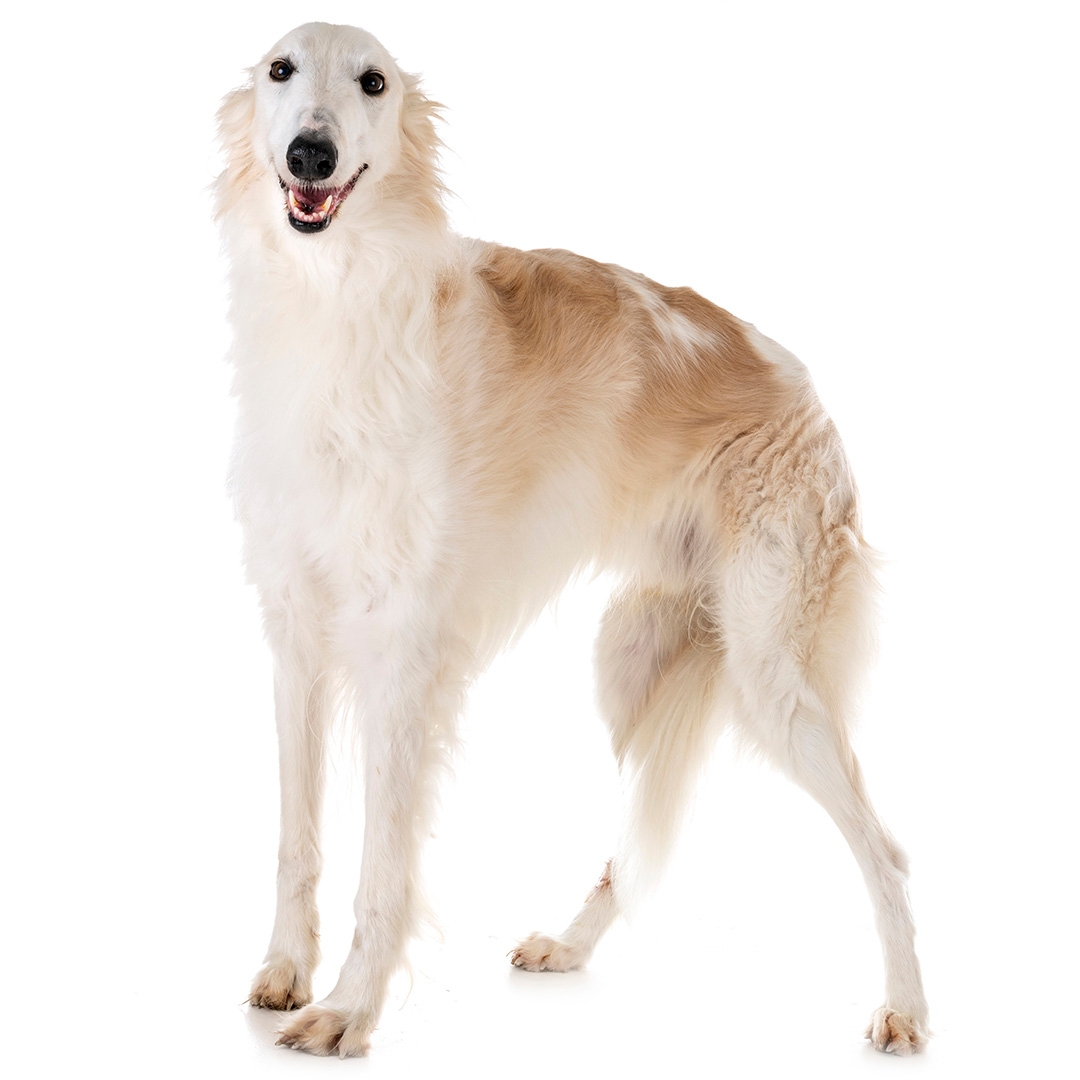
The Borzoi is a tall, elegant Russian sighthound bred to course wolves on the open plains. With their silky coat, aristocratic bearing, and gentle temperament, they are as graceful in the living room as they are swift in the field.
History
Originally called the Russian Wolfhound, the Borzoi was bred by Russian aristocracy for wolf hunting for centuries. The breed nearly vanished after the Russian Revolution when they were killed as symbols of the aristocracy. AKC recognized in 1891.
Appearance
A tall, graceful sighthound with a distinctive narrow, dolichocephalic head and a long, silky coat. They move with an effortless, flowing gait. Their elegant proportions and gentle expression are hallmarks of the breed.
Temperament
Quiet, dignified, and independent, the Borzoi has a calm, gentle temperament. They are affectionate with their family but reserved with strangers. Like many sighthounds, they have a cat-like independence.
Personality Around Others
Reserved with strangers but loyal to family. Generally peaceful with other dogs, especially other sighthounds. Very high prey drive—cannot be trusted with small animals. Gentle with respectful children.
Exercise Needs
Moderate exercise needs overall but need regular opportunities to run at full speed in a safe, enclosed area. Daily walks plus weekly sprint sessions are ideal. They are calm and quiet indoors.
Training
Independent and not eager to please, making training challenging. Positive reinforcement with patience is essential. They respond poorly to repetitive drills. Short, interesting training sessions work best.
Grooming
Regular brushing 2-3 times per week to prevent matting. More frequent during shedding seasons. The coat does not need trimming. Regular nail, ear, and dental care. They are relatively clean dogs.
Health
Common Health Conditions
Like many large, deep-chested breeds, bloat is the primary concern. Heart conditions and bone cancer should be monitored. They are sensitive to anesthesia due to low body fat.
Recommended Health Tests
- Cardiac Exam
- Ophthalmologist Evaluation
- Thyroid Evaluation
Average Annual Vet Cost
$1,000-$1,800
Nutrition
Feed a high-quality diet appropriate for large breeds. Multiple smaller meals help prevent bloat. They tend to be lean eaters. Monitor weight and adjust portions based on activity level.
Living Environment
Surprisingly adaptable to apartment living due to their calm indoor nature, provided they get regular exercise. Must have access to a safe running area. Secure, tall fencing is essential—they can easily clear 5-foot fences.
Ideal Family
Best for quiet households with older children. Ideal for owners who appreciate an independent, dignified companion. Not suited for households with cats or small pets. Experience with sighthounds is helpful.
Intelligence
Intelligent but independent-minded. They think for themselves and don't aim to please in the way herding or sporting breeds do. Their intelligence shows in problem-solving and reading their environment.
Barking
Frequency
Alert
Separation
Quiet Indoors
One of the quietest dog breeds. Borzoi rarely bark and are almost silent indoors. They may occasionally bark at something unusual but are not prone to excessive vocalization.
Shedding
Year-Round
Seasonal
Vacuum Factor 🧹
Hypoallergenic
Moderate shedding year-round with heavy seasonal shedding. Regular brushing helps manage the long, silky coat. Males tend to have more coat than females.
Weather Tolerance
☀️
Heat
❄️
Cold
🌧️
Rain
🌨️
Snow
💧
Humidity
Breed Ratings
Fun Facts
Borzoi can reach speeds of up to 40 mph
Leo Tolstoy featured Borzoi prominently in "War and Peace"
They were nearly extinct after the Russian Revolution
The breed was originally used to hunt wolves in packs of three
Famous Dogs
Elsie
Famous Borzoi owned by the Romanoff royal family of Russia
Common Myths
"Borzoi are fragile and delicate"
Despite their elegant appearance, they are powerful athletes bred to course wolves
"They need excessive exercise"
They are actually calm, quiet dogs that need short bursts of running rather than sustained activity
Frequently Asked Questions
Are Borzoi good apartment dogs?
Surprisingly yes—they are calm and quiet indoors. They need regular running opportunities but are couch potatoes at home.
Can Borzoi live with cats?
Generally not recommended. Their prey drive is extremely strong and even well-socialized Borzoi may chase cats.
Adoption Tips
Puppy Guide
Borzoi puppies grow very rapidly and need careful nutrition for proper bone development. Avoid excessive exercise during growth. Early socialization is important. They can be mouthy as puppies.
Senior Care
Senior Borzoi may develop joint issues and heart conditions. Provide supportive bedding. Moderate exercise remains important. Monitor for bone cancer symptoms. Regular cardiac checkups.
Ownership Costs
Estimated Lifetime Cost
$18,000-$28,000
Pros and Cons
Pros
Extremely quiet and calm indoors
Elegant, stunning appearance
Gentle temperament
Good apartment adaptability
Cons
Very strong prey drive
Independent and difficult to train
Sensitive to anesthesia
Cannot be off-leash in unfenced areas