
Irish Water Spaniel
Also known as: IWS, Rat Tail Spaniel, Whiptail
Energy Level
Apartment Friendly
Weight (Male)
55–68 lbs
Height (Male)
22–24 inches
Quick Facts
Coat Colors
Breed Summary
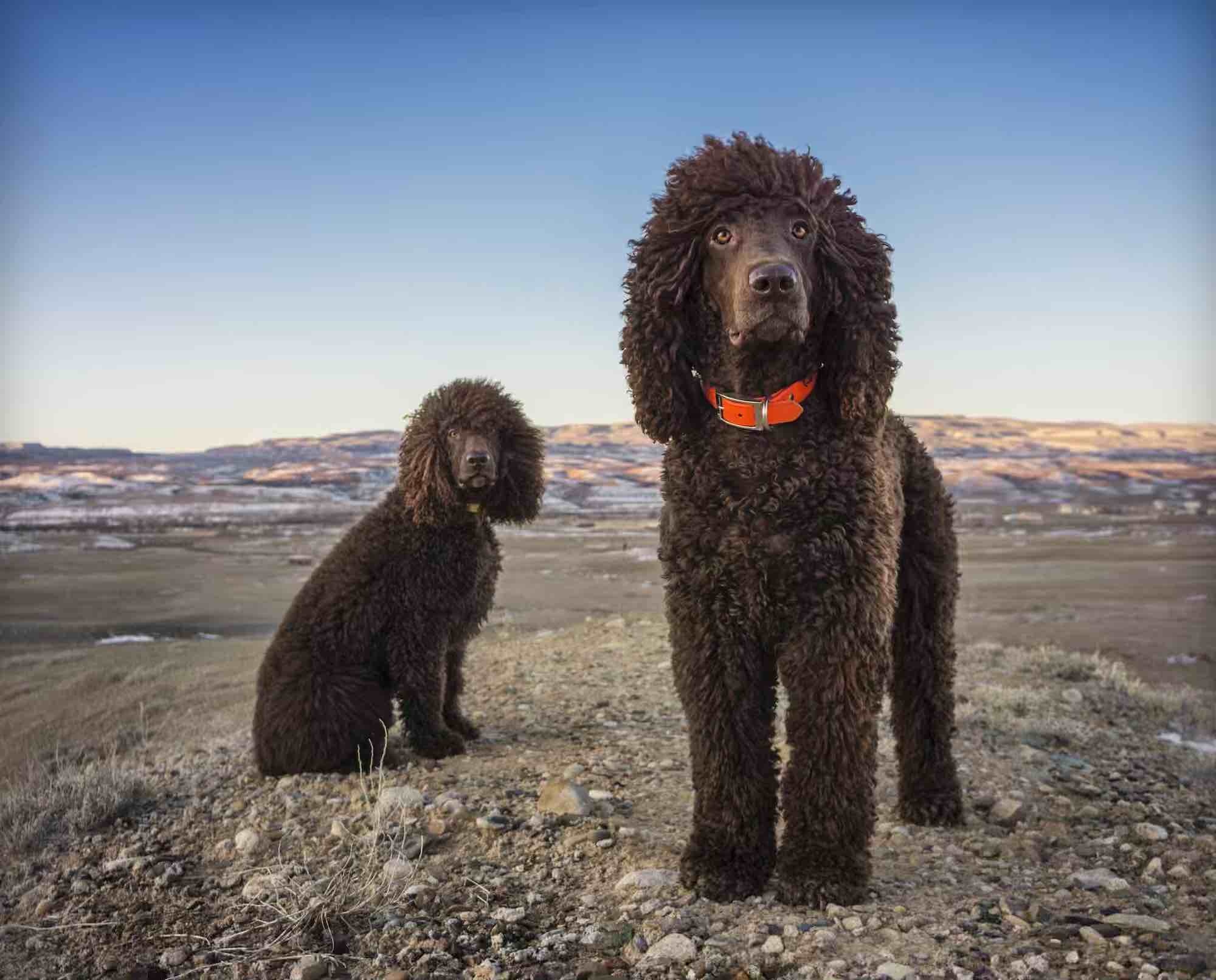
The Irish Water Spaniel is the tallest and one of the oldest spaniel breeds, easily identified by their curly liver coat, smooth face, and distinctive rat tail. They are excellent water retrievers with a clownish personality.
History
One of the oldest and rarest sporting breeds, dating to the 1830s in Ireland. Developed by Justin McCarthy, the breed's exact ancestry is debated but likely includes Poodle, Portuguese Water Dog, and Barbet bloodlines.
Appearance
Tall and well-built with a mass of tight, liver-colored curls covering the body. Their smooth face and distinctive smooth "rat tail" set them apart. A topknot of loose curls crowns their head.
Temperament
Clownish, brave, and loyal. Irish Water Spaniels are natural comedians with a mischievous streak and strong bond with their families.
Personality Around Others
Reserved with strangers but friendly with family. They are playful and can be clownish. Can be selective about which dogs they like.
Exercise Needs
High exercise needs — at least 1–1.5 hours daily. They love swimming above all else. Active, outdoor activities keep them happy.
Training
Intelligent and willing but can be stubborn. They respond to fun, varied training. Their clownish nature can make training entertaining.
Grooming
Regular coat care needed. Brush 2–3 times weekly to prevent matting. Professional grooming every 6–8 weeks. Their curly coat may be less allergenic.
Health
Common Health Conditions
Generally healthy but some lines show vaccine sensitivity. Discuss vaccination protocols with your vet. Ear care is important.
Recommended Health Tests
- Hip Evaluation
- Ophthalmologist Evaluation
- Thyroid Evaluation
Average Annual Vet Cost
$300–$800
Nutrition
High-quality food for active large breeds. About 2–2.5 cups daily in two meals. Adjust for activity level.
Living Environment
Need a house with yard, ideally near water. Not apartment dogs. They thrive with swimming access.
Ideal Family
Best for experienced owners who enjoy water activities. Good with older children. They need an owner who appreciates their quirky personality.
Intelligence
Highly intelligent and creative problem-solvers. They learn quickly but may add their own twist to commands.
Barking
Frequency
Alert
Separation
Quiet Indoors
Moderate barkers. They alert to visitors and may vocalize during play. Not excessive with adequate exercise.
Shedding
Year-Round
Seasonal
Vacuum Factor 🧹
Hypoallergenic
Very low shedding. Their tight curls trap loose hair, making them one of the more hypoallergenic sporting breeds.
Weather Tolerance
☀️
Heat
❄️
Cold
🌧️
Rain
🌨️
Snow
💧
Humidity
Breed Ratings
Fun Facts
The Irish Water Spaniel's distinctive rat tail is smooth with no feathering.
They have a unique topknot of loose curls on their head.
They are the tallest of all AKC spaniel breeds.
Their tight curls are virtually waterproof.
Justin McCarthy developed the modern breed but kept the crossing details secret.
Famous Dogs
Dorina
Early breed champion that defined the Irish Water Spaniel standard
Dorian
Foundation dog in American Irish Water Spaniel breeding
Common Myths
"They are related to Poodles."
While they share some ancestry and coat type, Irish Water Spaniels are a distinct and older breed with different working characteristics.
"Their coat doesn't need grooming."
While they shed less, their curly coat needs regular brushing to prevent matting and professional trimming to maintain shape.
Frequently Asked Questions
Are Irish Water Spaniels hypoallergenic?
They are among the more hypoallergenic breeds due to their minimal shedding and tight curly coat, but no breed is truly 100% hypoallergenic.
Why do they have a rat tail?
Their smooth tail is a breed characteristic. It's thought to help with swimming by acting as a rudder.
Puppy Guide
IWS puppies are playful and mischievous. Introduce water early. Start training with positive methods. Socialize extensively.
Senior Care
Senior IWS may develop thyroid and joint issues. Continue moderate exercise, especially swimming. Monitor for hearing loss.
Ownership Costs
Estimated Lifetime Cost
$16,000–$25,000
Pros and Cons
Pros
Low shedding, more hypoallergenic
Excellent water retriever
Loyal and entertaining personality
Very healthy breed
Unique, distinctive appearance
Cons
Rare breed with limited availability
Can be reserved with strangers
Regular coat maintenance needed
Stubborn streak in training
Needs swimming access ideally