
Curly-Coated Retriever
Also known as: Curly, CCR
Energy Level
Apartment Friendly
Weight (Male)
60–95 lbs
Height (Male)
25–27 inches
Quick Facts
Coat Colors
Breed Summary
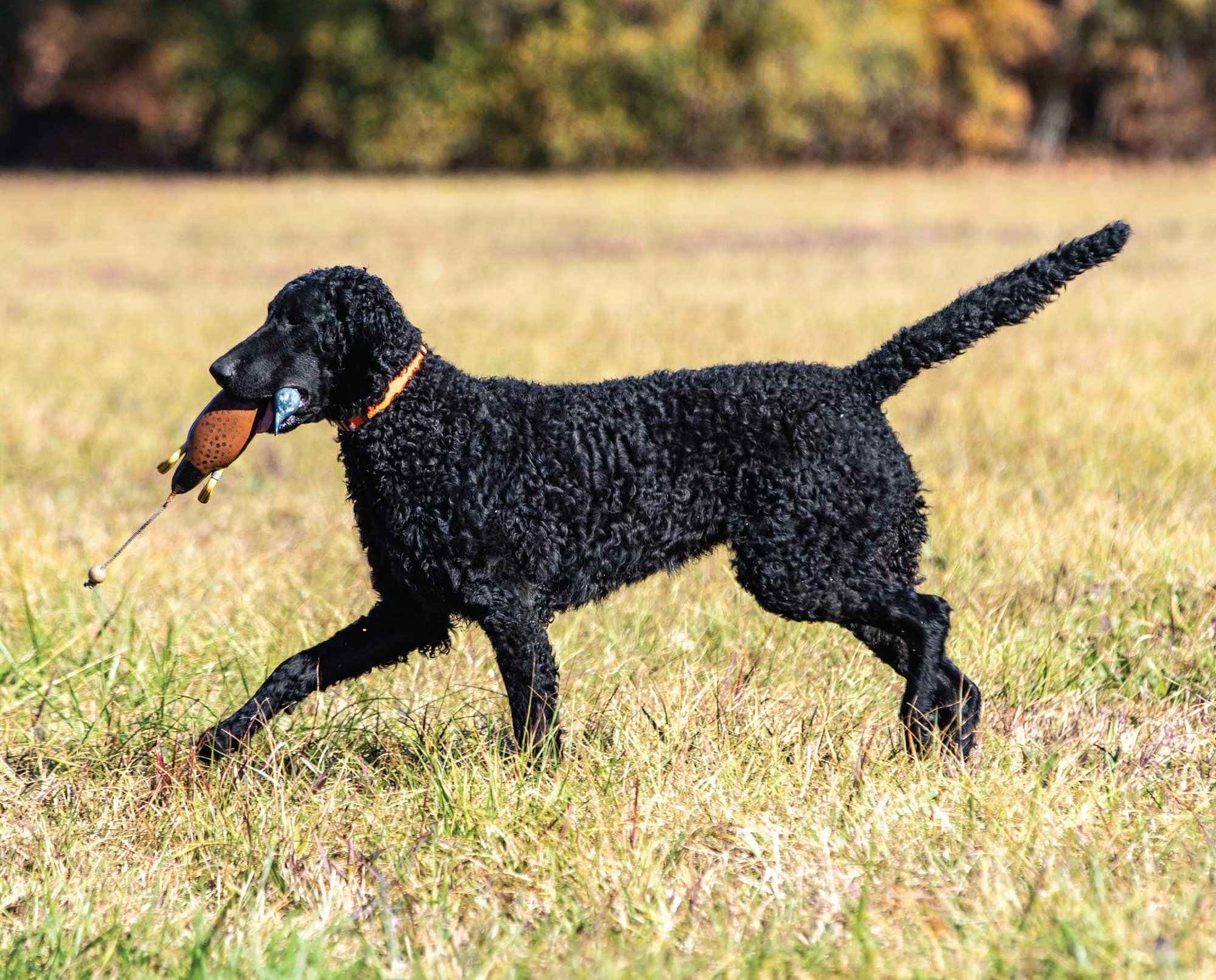
The Curly-Coated Retriever is the oldest and tallest of the retriever breeds, distinguished by its mass of tight, waterproof curls. Confident, proud, and wickedly smart, they are outstanding water retrievers with an independent streak.
History
The oldest retriever breed, dating to the late 1700s in England. They likely descend from crosses of the English Water Spaniel, Irish Water Spaniel, and Poodle. They were prized for waterfowl and upland hunting.
Appearance
Tall and elegantly built with a distinctive coat of tight, crisp curls covering the body, with smooth hair on the face and front of legs. Their confident carriage and alert expression reflect their proud nature.
Temperament
Confident, proud, and intelligent with an independent nature. More reserved than other retrievers, Curlies are loyal to their families but take time to warm up to strangers.
Personality Around Others
Reserved with strangers but not aggressive. Good with children they know. Generally friendly with other dogs. Their independent nature means they're not as overtly sociable as Labs or Goldens.
Exercise Needs
High exercise needs — at least 1 hour of vigorous activity daily. They excel at swimming and retrieving. Active outdoor activities keep them happy and well-balanced.
Training
Intelligent but can be independent and easily bored with repetitive training. Keep sessions short, varied, and interesting. Positive reinforcement with mental challenges works best.
Grooming
Surprisingly low-maintenance. Their tight curls rarely mat. Occasional bathing and minimal brushing — brushing can frizz the curls. Wet the coat and let it air dry for best appearance.
Health
Common Health Conditions
Generally healthy but some lines are prone to cancer. GSD is a serious hereditary condition specific to the breed. Regular screening is important.
Recommended Health Tests
- Hip Evaluation
- Ophthalmologist Evaluation
- GSD DNA Test
- Cardiac Exam
Average Annual Vet Cost
$400–$900
Nutrition
Feed a high-quality food for large, active breeds. About 2–2.5 cups daily divided into two meals. Adjust based on activity level.
Living Environment
Need a house with a yard, ideally with access to water for swimming. Not suited for apartment living. They need space and outdoor activities.
Ideal Family
Best for experienced dog owners who appreciate an independent, intelligent companion. Great for active families and hunters who want a loyal but self-assured dog.
Intelligence
Highly intelligent with excellent problem-solving skills. Their independence means they think for themselves, which can be both an asset in the field and a challenge in training.
Barking
Frequency
Alert
Separation
Quiet Indoors
Moderate barkers. They will alert to unusual activity but are not prone to excessive barking. Generally calm and quiet indoors.
Shedding
Year-Round
Seasonal
Vacuum Factor 🧹
Hypoallergenic
Moderate shedding. Their tight curls hold loose hair, making shedding less noticeable than other retrievers. Seasonal shedding is moderate.
Weather Tolerance
☀️
Heat
❄️
Cold
🌧️
Rain
🌨️
Snow
💧
Humidity
Breed Ratings
Fun Facts
The Curly-Coated Retriever is the oldest of all retriever breeds.
Their tight curls are naturally waterproof and provide protection from brambles.
They are sometimes called the 'thinking person's retriever' due to their intelligence.
The face and front of legs are smooth while the body is covered in curls.
They mature slower than other retrievers, often acting puppyish until age 3.
Famous Dogs
Doris
Early breed champion who helped establish the breed standard in England
Doris the CCR
Famous Instagram Curly-Coated Retriever with a large following
Common Myths
"Curly-Coated Retrievers are hypoallergenic."
While their curly coat sheds less visibly, they are not hypoallergenic. They still produce dander and shed moderately.
"They need extensive grooming like Poodles."
Despite the curly coat, they are low-maintenance. Over-brushing actually ruins their curls. They need less grooming than most long-coated breeds.
Frequently Asked Questions
Why are Curly-Coated Retrievers so rare?
They remain one of the rarest AKC breeds, partly because they are less 'flashy' than Labs and Goldens. Their independent nature also means they appeal to a more specific type of owner.
How do you groom a Curly-Coated Retriever?
Minimal grooming. Don't brush the curls as it creates frizz. Wet the coat and let it air dry. Occasional bathing is fine. Trim stray hairs as needed.
Adoption Tips
Puppy Guide
Curly puppies mature slowly. Be patient with training and use positive methods. Socialize extensively. Their independent streak shows early — make training fun and varied.
Senior Care
Monitor for cancer, which is a concern in the breed. Maintain moderate exercise. Watch for joint issues. Regular vet checkups are important.
Similar Breeds
Ownership Costs
Estimated Lifetime Cost
$15,000–$24,000
Pros and Cons
Pros
Low-maintenance coat despite curly appearance
Excellent water retriever
Loyal and devoted to family
Independent and confident
Versatile sporting dog
Cons
Can be aloof with strangers
Independent streak makes training challenging
Rare breed with limited availability
Cancer risk in some lines
Not as overtly affectionate as other retrievers