
Bulldog
Also known as: English Bulldog, British Bulldog
Energy Level
Apartment Friendly
Weight (Male)
50 lbs (23 kg)
Height (Male)
14–15 inches (36–38 cm)
Quick Facts
Coat Colors
Breed Summary
The Bulldog is an iconic breed that has transformed from a fierce bull-baiting gladiator into one of the gentlest, most lovable companion dogs in existence. With its distinctive wrinkled face, pushed-in nose, and muscular, low-slung body, the Bulldog is instantly recognizable and universally adored.
Today's Bulldog is a far cry from its aggressive ancestors. Modern Bulldogs are calm, courageous, and friendly dogs that form incredibly strong bonds with their families. They are excellent with children, adaptable to apartment living, and have a dignified, sometimes comically stubborn personality.
The breed's biggest challenges revolve around health—brachycephalic syndrome, joint issues, and skin problems require diligent care. But for owners willing to manage these needs, the Bulldog rewards them with unwavering loyalty and a personality that is both regal and ridiculous in the best possible way.
History
The Bulldog's origins are among the most dramatic in dogdom. Bred in 13th-century England specifically for bull-baiting—a brutal blood sport where dogs attacked tethered bulls—the original Bulldogs were fierce, pain-resistant, and extraordinarily tenacious. Their flat faces allowed them to breathe while gripping the bull, and their low-slung body kept them grounded against the bull's horns.
When bull-baiting was banned in England in 1835, the Bulldog faced extinction—its sole purpose had been outlawed. Dedicated breed enthusiasts stepped in, selectively breeding for companionship rather than aggression. Over several generations, the breed's temperament was completely transformed from ferocious fighter to gentle family dog.
The AKC recognized the Bulldog in 1886, making it one of the earliest registered breeds. Today, the Bulldog serves as the mascot of the United States Marine Corps, over 40 universities, and the nation of England itself—a testament to its symbolism of determination and courage.
Appearance
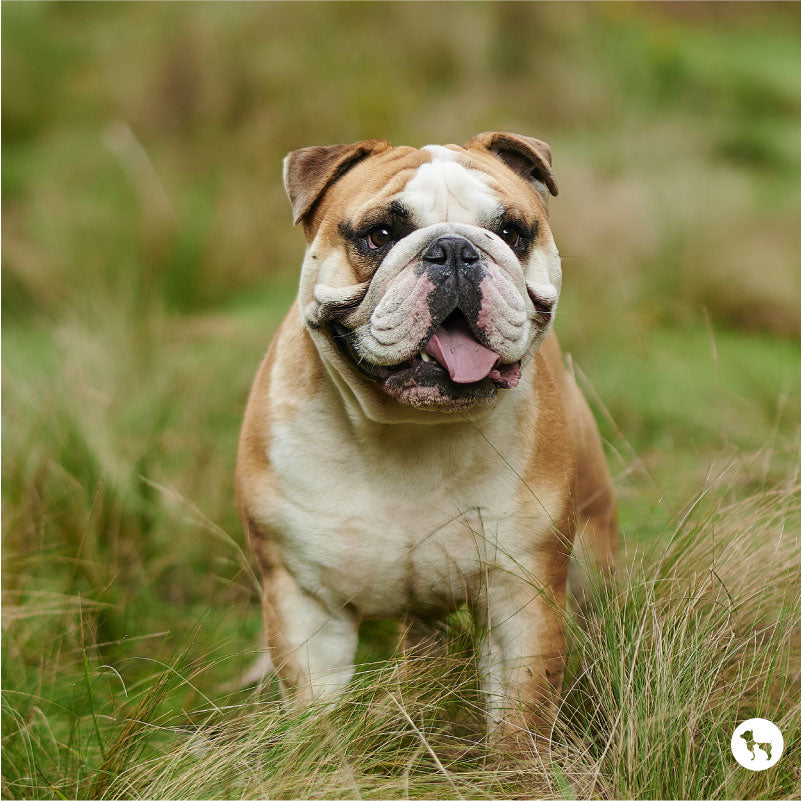
The Bulldog is unmistakable—thick-set, low, compact, and wide with a massive, short-faced head. Males weigh about 50 pounds, females about 40 pounds, standing just 14-15 inches tall. The head is enormous in proportion to the body, with a broad, flat skull and heavy facial wrinkles. The lower jaw protrudes noticeably (undershot bite), and the distinctive pushed-in nose creates the breed's characteristic "sourpuss" expression.
The body is heavy, thick, and low with a wide chest and shoulders. The distinctive "roach back" rises slightly behind the shoulders. The tail is naturally short—either straight or screwed. The coat is short, flat, and glossy.
Temperament
Bulldogs are calm, dignified, and sometimes comically stubborn. They bond deeply with their families and are remarkably patient with children. Despite their fierce ancestry, modern Bulldogs are gentle, friendly dogs that rarely show aggression. They have a quiet confidence and a "I'll do it when I'm ready" attitude that is both endearing and exasperating. Bulldogs are not high-energy dogs—they enjoy short bursts of playfulness followed by long naps. Their loyalty to their family is absolute, and they will stand their ground if they perceive a threat, despite their preference for comfort over confrontation.
Personality Around Others
Bulldogs are generally good with everyone. They are famously patient with children—their sturdy build can handle rough play, and their gentle nature means they rarely react negatively. Other dogs are usually accepted, though some Bulldogs may be territorial. Cats are generally tolerated. Strangers are greeted with calm curiosity rather than excitement or aggression. Elderly owners find Bulldogs to be ideal companions due to their low energy and affectionate nature.
Exercise Needs
Bulldogs need surprisingly little exercise—15 to 30 minutes of gentle activity daily is sufficient. Short, leisurely walks in cool weather are ideal. NEVER exercise a Bulldog in heat or humidity—their brachycephalic anatomy makes them extremely susceptible to heatstroke. Avoid stairs, jumping, and high-impact activities that stress their joints and spine. Indoor play and puzzle toys provide mental stimulation without physical strain.
Training
Bulldogs are intelligent but notoriously stubborn. Training requires patience, consistency, and creative motivation—food rewards are essential. Keep sessions short (5-10 minutes), fun, and varied. Bulldogs will shut down if they feel pressured or bored. Housebreaking can take 4-6 months. Positive reinforcement only—harsh methods are counterproductive with this sensitive-under-the-tough-exterior breed.
Grooming
Bulldogs need moderate grooming with special attention to their facial wrinkles. Clean between wrinkles DAILY with a damp cloth to prevent bacterial and yeast infections—this is the most important grooming task. Brush weekly with a soft bristle brush. Bathe every 4-6 weeks. Clean the tail pocket (skin fold under the tail) regularly. Ear cleaning weekly, nail trimming every 2-3 weeks, and dental care round out the routine.
Health
Common Health Conditions
Bulldogs have significant health challenges primarily related to their brachycephalic structure. BOAS causes breathing difficulties, snoring, and exercise intolerance. Skin fold dermatitis requires daily wrinkle cleaning to prevent. Joint and spinal issues are common due to their heavy, compact build. Heat stroke is a constant danger in warm weather. Most Bulldogs require C-section for delivery. Despite these challenges, well-cared-for Bulldogs can live healthy, happy lives to 8-10 years.
Recommended Health Tests
- Hip Evaluation
- Cardiac Exam
- Patellar Evaluation
- Tracheal Hypoplasia Radiograph
- BOAS Assessment
Average Annual Vet Cost
$1,000–$2,500
Nutrition
Bulldogs are prone to obesity, which worsens breathing and joint problems. Adults typically need 1,000-1,300 calories daily. Feed twice daily with measured portions—never free-feed. Use slow-feeder bowls to prevent gulping, which causes gas and bloating. Many Bulldogs have food allergies; limited ingredient diets may be necessary. Omega fatty acids help skin health—critical for a wrinkle-prone breed.
Living Environment
Bulldogs are excellent apartment dogs—calm, quiet, and low-energy indoors. Air conditioning is absolutely essential; Bulldogs cannot tolerate heat. They should live primarily indoors in a climate-controlled environment. Minimal yard space is needed. Avoid homes with many stairs, which stress Bulldog joints and spine. The ideal environment is a cool, comfortable indoor space with easy access to a small outdoor area.
Ideal Family
Bulldogs are ideal for laid-back families, seniors, apartment dwellers, and anyone wanting a low-energy but deeply loving companion. Excellent with children of all ages. Perfect for homebodies and people who enjoy relaxed lifestyles. NOT ideal for active/outdoor-focused owners, hot climate residents without AC, or budget-conscious owners (vet costs are high).
Intelligence
Bulldogs rank around 77th in canine intelligence, but this reflects their stubbornness rather than inability to learn. They understand commands well but decide whether to comply based on their own assessment of the situation. Problem-solving ability is moderate, and their emotional intelligence—reading human emotions and providing comfort—is surprisingly high.
Barking
Frequency
Alert
Separation
Quiet Indoors
Bulldogs are quiet dogs that rarely bark without reason. They grunt, snort, and wheeze more than they bark. This makes them excellent apartment dogs and good neighbors.
Shedding
Year-Round
Seasonal
Vacuum Factor 🧹
Hypoallergenic
Bulldogs shed moderately. Their short coat produces noticeable but manageable shedding. Regular brushing keeps it under control. Not as heavy as double-coated breeds.
Weather Tolerance
☀️
Heat
❄️
Cold
🌧️
Rain
🌨️
Snow
💧
Humidity
Breed Ratings
Fun Facts
Bulldogs are the official mascot of the U.S. Marine Corps.
Over 40 U.S. universities use the Bulldog as their mascot.
The breed has been completely reinvented—modern Bulldogs are nothing like their bull-baiting ancestors.
Most Bulldogs cannot swim due to their dense, front-heavy build.
Winston Churchill was often compared to a Bulldog, though he actually owned Poodles.
Bulldogs are known for skateboarding—several have gone viral for this unusual talent.
The breed cannot reproduce naturally in most cases—90% require C-sections.
Bulldogs snore louder than many humans due to their elongated soft palate.
Famous Dogs
Handsome Dan
Yale University's mascot since 1889—the first live college mascot in America
Tillman
Guinness World Record holder for fastest dog on a skateboard
Uga
University of Georgia's beloved live Bulldog mascot line since 1956
Spike
The famous Bulldog from Tom and Jerry cartoons
Common Myths
"Bulldogs are aggressive because of their fighting heritage."
Modern Bulldogs have been bred for 180+ years specifically for gentle, friendly temperaments. They are among the least aggressive dog breeds.
"Bulldogs are lazy."
While low-energy, Bulldogs do enjoy play and short walks. Their limitations are often physical (breathing difficulties) rather than motivational.
"All Bulldogs have terrible health."
While the breed has predispositions, well-bred Bulldogs from health-tested parents can live comfortable lives. Responsible breeding is improving breed health.
Frequently Asked Questions
Are Bulldogs good with children?
Excellent! Bulldogs are patient, gentle, and sturdy enough to handle children's play. They are one of the most recommended breeds for families with kids.
Can Bulldogs swim?
No. Like French Bulldogs, their heavy, front-loaded structure makes swimming dangerous. Always supervise near water.
How much exercise does a Bulldog need?
Just 15-30 minutes of gentle activity daily. Avoid heat and humidity. Short, leisurely walks in cool weather are ideal.
Do Bulldogs drool a lot?
Moderately. They drool more than average, especially after drinking water and eating. Keep a cloth handy.
Why are Bulldogs so expensive?
Breeding difficulties (artificial insemination, C-sections), extensive health testing, and high demand drive prices up.
Adoption Tips
Bulldog rescues include the Bulldog Club of America Rescue Network and regional Bulldog rescues. Many Bulldogs are surrendered due to unexpected health costs. Ask thoroughly about medical history, breathing ability, and skin issues. Budget for ongoing health care. Adult Bulldogs from rescues can be wonderful, lower-cost alternatives to purchasing.
Puppy Guide
Bulldog puppies are adorable but fragile. Never exercise in heat. Socialization before 16 weeks builds confidence. Feed small-breed puppy food 3-4 times daily until 6 months. Start wrinkle-cleaning routines immediately. House training takes patience—4-6 months. Avoid jumping and stairs to protect developing joints. Growth is complete by 12-14 months.
Senior Care
Bulldogs are senior by age 6-7 due to shorter lifespan. Joint supplements become essential. Breathing may worsen—monitor closely. Keep weight optimal. Regular vet visits every 6 months with full blood panels. Orthopedic beds are important for joint comfort. Keep exercise gentle but consistent.
Similar Breeds
French Bulldog
Smaller, more active, with bat ears. Similar brachycephalic concerns but slightly fewer joint issues.
American Bulldog
Larger, more athletic, with fewer breathing issues. More active and needs more exercise.
Pug
Much smaller with similar flat-faced charm. Similar health concerns but even more portable.
Boston Terrier
Lighter, more athletic "tuxedo dog." Fewer health issues but similar brachycephalic structure.
Ownership Costs
Estimated Lifetime Cost
$20,000–$40,000
Pros and Cons
Pros
Incredibly gentle and patient with children
Low exercise needs—perfect for laid-back owners
Calm, dignified personality
Excellent apartment dog
Quiet—minimal barking
Loyal and deeply bonded to family
Iconic appearance
Good for first-time owners
Cons
Significant health issues (BOAS, joints, skin)
Very short lifespan (8-10 years)
Extreme heat intolerance
High veterinary costs
Cannot swim—drowning risk
Stubborn and difficult to train
Excessive drooling and flatulence
Daily wrinkle cleaning required