
Bloodhound
Also known as: St. Hubert Hound, Chien de Saint-Hubert
Energy Level
Apartment Friendly
Weight (Male)
90-110 lbs
Height (Male)
25-27 inches
Quick Facts
Coat Colors
Breed Summary
The Bloodhound possesses the most powerful nose in the canine world, capable of following trails that are days old. This gentle giant is as sweet and patient at home as it is relentless on the trail.
History
Bred by monks at the Saint-Hubert Monastery in Belgium over 1,000 years ago, the Bloodhound was perfected as a trailing dog. Their tracking results are admissible as evidence in court. AKC recognized in 1885.
Appearance
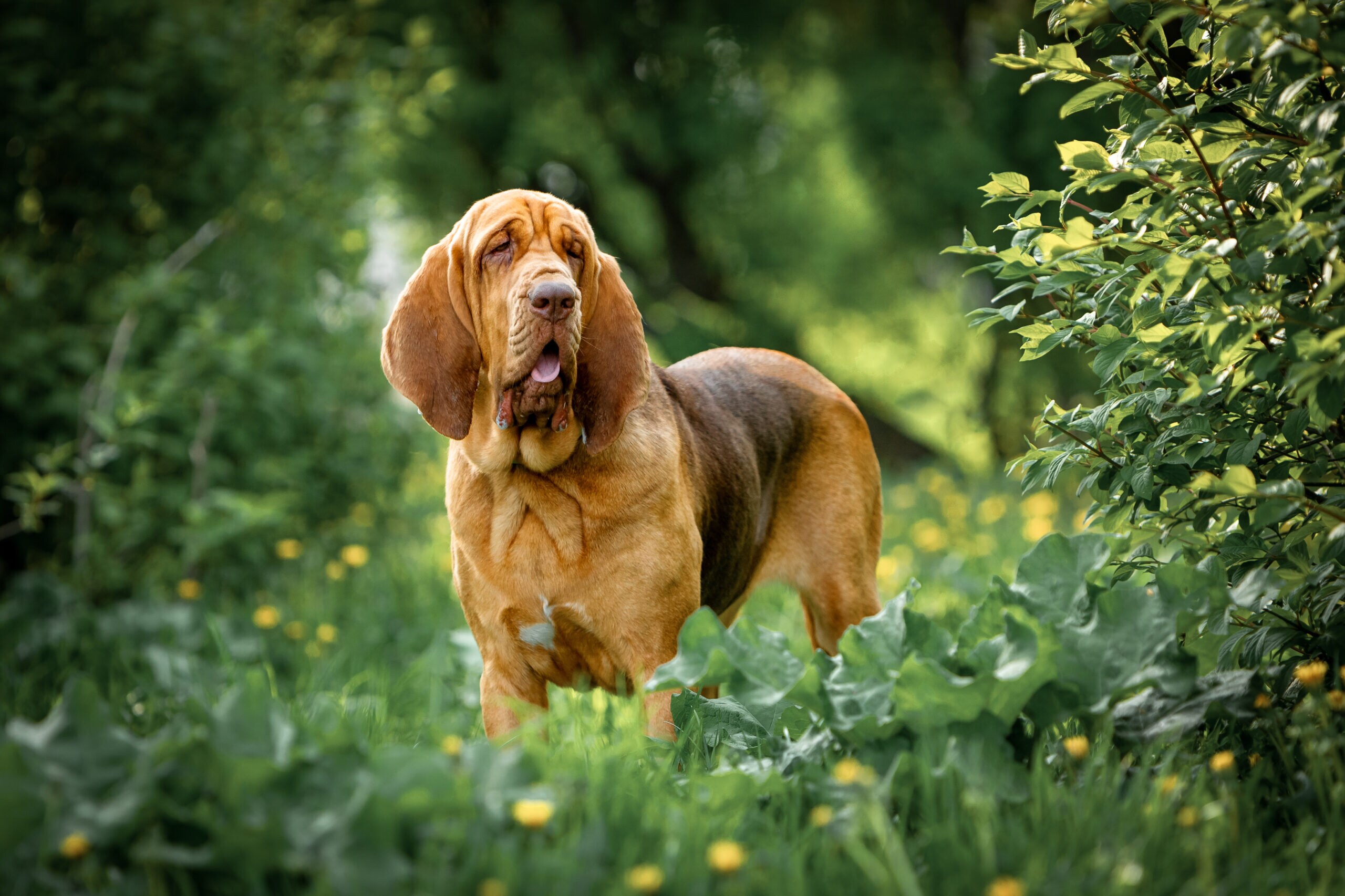
A large, powerful hound with iconic loose, wrinkled skin on the face and neck. Long, low-set ears and deep-set, diamond-shaped eyes give them their characteristic expression. Strong, muscular build.
Temperament
Gentle, patient, and noble, the Bloodhound is a devoted family companion. They are docile and affectionate but can be stubborn. Once on a scent, nothing can distract them.
Personality Around Others
Extremely friendly with everyone including strangers and children. They are patient and gentle, making excellent family dogs. They get along well with other dogs but their size can overwhelm small children.
Exercise Needs
Moderate exercise needs but they must have daily opportunities to use their nose. Long walks with sniffing opportunities are ideal. They enjoy tracking activities but are not high-energy dogs in general.
Training
Challenging to train due to their single-minded focus on scent. Positive reinforcement with patience is essential. They are sensitive to harsh corrections. Begin training early before their size makes them unmanageable.
Grooming
Weekly brushing, plus daily cleaning of facial wrinkles to prevent infection. Regular ear cleaning is crucial. They drool heavily, so keep towels handy. Bathe regularly as they can have a strong houndy odor.
Health
Common Health Conditions
Bloat is the primary health concern and can be life-threatening. Their deep chest makes them susceptible. Hip and elbow evaluations are important. Regular ear and eye care is essential.
Recommended Health Tests
- Hip Evaluation
- Elbow Evaluation
- Cardiac Exam
Average Annual Vet Cost
$1,200-$2,000
Nutrition
Need quality food appropriate for large breeds. Feed 2-3 smaller meals rather than one large meal to help prevent bloat. Use elevated food bowls cautiously (research is mixed on bloat prevention). Monitor weight.
Living Environment
Need a home with a secure yard—they will follow scents over or through fences. Not suited for apartments due to size and drool. Rural or suburban settings with space are ideal.
Ideal Family
Best for patient owners who enjoy the breed's unique traits. Families with older children are ideal. Owners must be comfortable with drool and occasional stubbornness. Active families who enjoy hiking and tracking.
Intelligence
Extremely intelligent when it comes to scent work—they have up to 300 million scent receptors. For obedience, they can be stubbornly single-minded. They learn quickly but choose when to comply.
Barking
Frequency
Alert
Separation
Quiet Indoors
Deep, resonant baying rather than barking. Most vocal when on a scent trail or when left alone. Moderate vocalization overall.
Shedding
Year-Round
Seasonal
Vacuum Factor 🧹
Hypoallergenic
Moderate shedding year-round with heavier seasonal shedding. Weekly brushing helps manage loose hair. Their short coat is relatively easy to maintain.
Weather Tolerance
☀️
Heat
❄️
Cold
🌧️
Rain
🌨️
Snow
💧
Humidity
Breed Ratings
Fun Facts
Bloodhound tracking results are admissible in court
They have approximately 300 million scent receptors—40 times more than humans
A Bloodhound named Tigger holds the record for the longest dog ears at 13.75 inches
They can follow trails that are over 300 hours (12+ days) old
Famous Dogs
Nick Carter
A Bloodhound who helped solve over 600 criminal cases in the early 1900s
Tigger
Guinness World Record holder for the longest ears on a dog
Common Myths
"Bloodhounds are aggressive tracking dogs"
They are among the gentlest of all breeds—their name refers to being purebred, not blood-seeking
"They are lazy dogs"
While calm at home, they have impressive stamina and endurance on the trail
Frequently Asked Questions
Do Bloodhounds drool a lot?
Yes, they are heavy droolers. Keep towels around the house and expect drool on walls, furniture, and clothing.
How far can a Bloodhound track?
They can follow trails over 130 miles long and trails that are more than 12 days old.
Puppy Guide
Bloodhound puppies grow rapidly and need joint-supporting nutrition. Start training early while they are still manageable in size. Socialize extensively. Supervise around small children due to their size.
Senior Care
Senior Bloodhounds may develop joint issues—provide supportive bedding and moderate exercise. Monitor for bloat throughout life. Regular wrinkle and ear cleaning remains important. Watch weight carefully.
Ownership Costs
Estimated Lifetime Cost
$18,000-$28,000
Pros and Cons
Pros
Incredibly gentle and patient
World-class scenting ability
Excellent with children
Loyal and devoted
Cons
Heavy drooling
Strong houndy odor
Stubborn and difficult to train
Prone to bloat