
Tibetan Terrier
Also known as: Tsang Apso, Holy Dog of Tibet
Energy Level
Apartment Friendly
Weight (Male)
20-24 lbs
Height (Male)
14-17 inches
Quick Facts
Coat Colors
Breed Summary
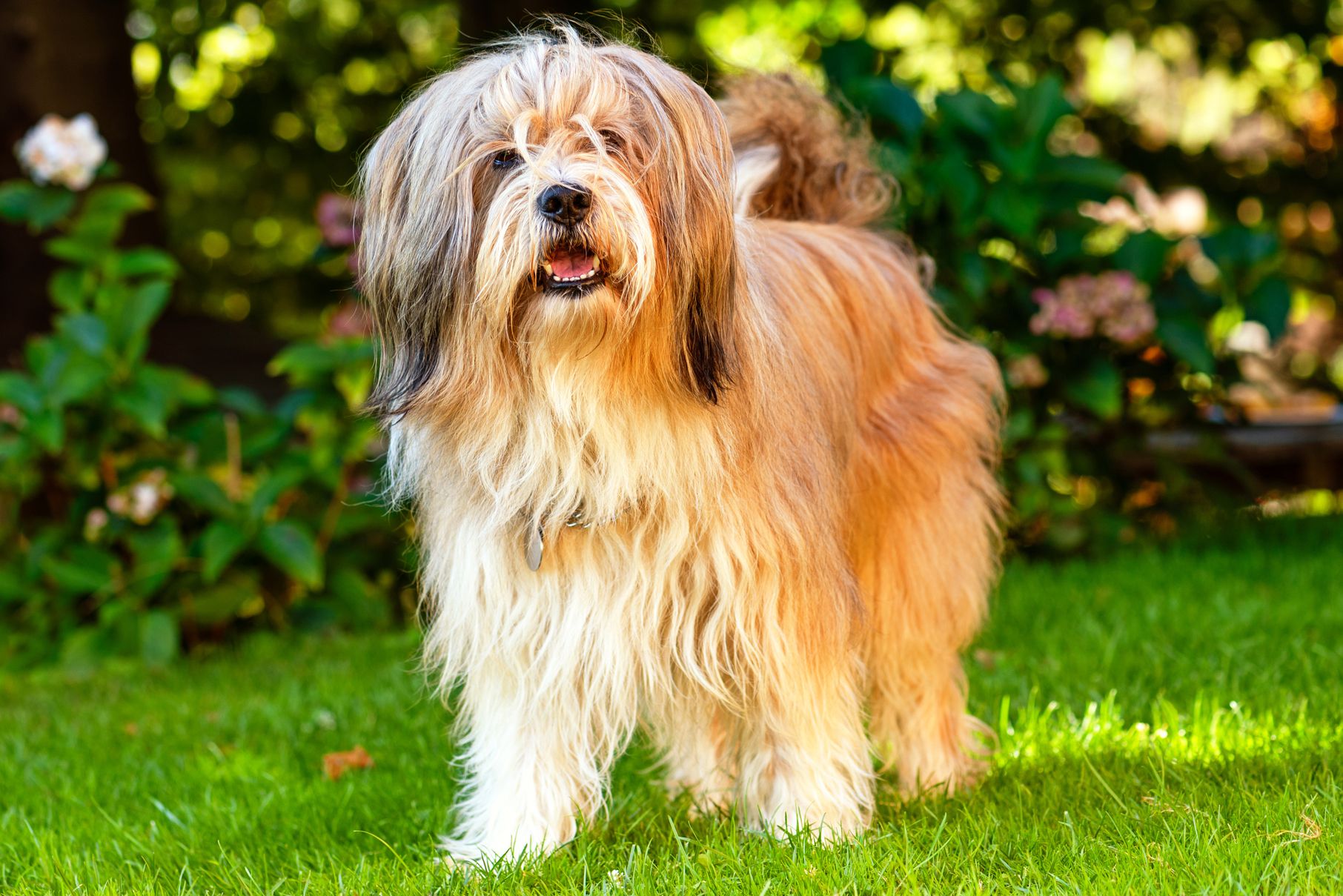
The Tibetan Terrier is neither from Tibet's terrier tradition nor a true terrier—they are ancient companion dogs bred by monks as good luck charms. With their large, flat, snowshoe-like feet and long coat, they are built for Tibetan terrain.
History
An ancient breed kept by monks in Tibetan monasteries for over 2,000 years. Known as the Holy Dog of Tibet. Believed to bring good luck. Never sold—only given as gifts. Their flat, broad feet acted as snowshoes. AKC recognized in 1973.
Appearance
A medium-sized, sturdy dog with a profuse double coat. Large, flat, round feet that act as snowshoes. Dark, large eyes with a warm expression. Square build. Coat falls from a center part.
Temperament
Affectionate, sensitive, and devoted. Tibetan Terriers are gentle dogs with a keen sense of humor. They bond deeply with family and are surprisingly adaptable and athletic.
Personality Around Others
Very devoted to family. Friendly with people they know. Can be reserved with strangers initially. Good with children. Social with other dogs.
Exercise Needs
Moderate exercise needs. Daily walks and play. Enjoy hiking. Adaptable to activity levels.
Training
Intelligent and willing to learn. Positive reinforcement. Sensitive to harsh correction. Enjoy training.
Grooming
High-maintenance coat. Daily brushing or keep in shorter clip. Professional grooming regularly.
Health
Common Health Conditions
Eye issues are the primary concern—PRA testing essential. Generally healthy with long lifespan.
Recommended Health Tests
- PRA DNA Test
- Hip Evaluation
- Ophthalmologist Evaluation
Average Annual Vet Cost
$700-$1,400
Nutrition
Quality food for medium breeds. Two meals daily. Moderate appetite. Not prone to obesity.
Living Environment
Good apartment dogs. Adaptable. Need daily exercise. Indoor/outdoor dogs.
Ideal Family
Families wanting a devoted, adaptable companion. Those committed to grooming. Active individuals.
Intelligence
Intelligent and eager to learn. Sensitive and responsive. Good problem-solvers.
Barking
Frequency
Alert
Separation
Quiet Indoors
Moderate barkers. Alert when needed. Can bark when anxious.
Shedding
Year-Round
Seasonal
Vacuum Factor 🧹
Hypoallergenic
Low shedding with regular grooming. Long coat traps loose hair. Daily brushing essential.
Weather Tolerance
☀️
Heat
❄️
Cold
🌧️
Rain
🌨️
Snow
💧
Humidity
Breed Ratings
Fun Facts
Not actually a terrier—they are companion/herding dogs from Tibet
Their large, flat feet act as natural snowshoes for Tibetan terrain
Were never sold—only given as gifts by monks as good luck charms
One of the oldest dog breeds, dating back over 2,000 years
Believed to bring good luck and fortune in Tibetan culture
Famous Dogs
Dr. Greig's Bunti
The first Tibetan Terrier brought to England by Dr. Agnes Greig in the 1920s after treating a sick patient in India
Common Myths
"They're a type of terrier"
Not terriers at all—European visitors misnamed them. They are Tibetan companion dogs with no terrier ancestry
"Their coat is purely decorative"
The heavy double coat protected them from extreme Tibetan mountain weather and temperatures
Frequently Asked Questions
Why are they called terriers?
European visitors misidentified them as terriers due to their size. They are not related to any terrier breed.
Do their feet really work like snowshoes?
Yes—their large, flat, round feet with hair between the toes give them excellent traction on snow and rough terrain.
Puppy Guide
TT puppies are affectionate and curious. Start grooming routine early. Socialize gently.
Senior Care
Senior TTs remain devoted and gentle. Eye monitoring important. Moderate exercise. Very long-lived breed.
Ownership Costs
Estimated Lifetime Cost
$16,000-$24,000
Pros and Cons
Pros
Very long lifespan
Devoted companion
Good luck charm heritage
Adaptable
Low shedding
Cons
High grooming needs
Needs daily brushing
Grooming costs
Can be reserved initially
Coat requires commitment