
Komondor
Also known as: Hungarian Komondor, Mop Dog
Energy Level
Apartment Friendly
Weight (Male)
100+ lbs
Height (Male)
27.5+ inches
Quick Facts
Coat Colors
Breed Summary
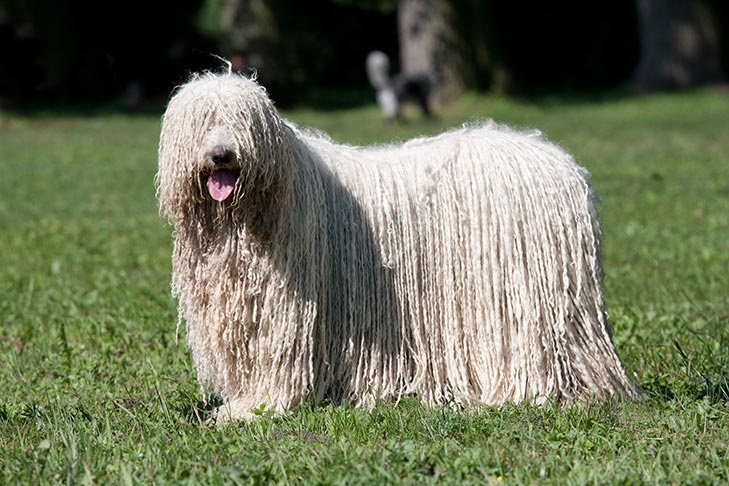
The Komondor is an imposing Hungarian livestock guardian instantly recognizable by their unique white corded coat that resembles dreadlocks or a mop. Beneath those cords lies a powerful, intelligent, and fiercely protective guardian.
History
Brought to Hungary by the Cumans people over 900 years ago. Bred to guard sheep on the Hungarian plains—their white corded coat helped them blend with the flock. AKC recognized in 1937.
Appearance
A very large, muscular dog completely covered in long white cords. Their distinctive coat is their most recognizable feature. Strong, powerful build hidden beneath the cords.
Temperament
Independent, protective, and serious about their guardian duties. The Komondor is loyal to family but deeply suspicious of strangers. They are calm and steady but will spring into action when they perceive a threat.
Personality Around Others
Devoted to family but very wary of strangers. Can be aggressive toward unfamiliar dogs and people. Excellent with family children. Needs extensive socialization from puppyhood.
Exercise Needs
Moderate exercise—daily walks and space to patrol. Not high-energy but need a job. Best with a property to guard.
Training
Very challenging to train. Extremely independent. Need a confident, experienced handler. Early socialization is absolutely critical.
Grooming
The corded coat requires unique care. Cords must be manually separated to prevent matting into large plates. Baths require extensive drying time (up to 2 days). No brushing—cords form naturally.
Health
Common Health Conditions
Generally hardy and healthy. Their coat can hide skin issues. Regular vet checks important. Bloat prevention is essential.
Recommended Health Tests
- Hip Evaluation
- Ophthalmologist Evaluation
Average Annual Vet Cost
$1,000-$1,800
Nutrition
Quality food appropriate for large breeds. Two meals daily to prevent bloat. Monitor weight under the coat.
Living Environment
Need a large property with secure fencing. Absolutely not apartment dogs. Best as working livestock guardians. Rural settings ideal.
Ideal Family
Only for experienced guardian breed owners. Those with livestock to protect. Not a casual pet. Requires commitment to coat care and socialization.
Intelligence
Very intelligent with independent decision-making. They assess situations on their own. Quick to react to threats.
Barking
Frequency
Alert
Separation
Quiet Indoors
Deep, powerful bark used to warn and deter threats. Nocturnal barking is common. Very vocal when they perceive danger.
Shedding
Year-Round
Seasonal
Vacuum Factor 🧹
Hypoallergenic
Minimal shedding—dead hair is trapped in the cords. The cords themselves require special care.
Weather Tolerance
☀️
Heat
❄️
Cold
🌧️
Rain
🌨️
Snow
💧
Humidity
Breed Ratings
Fun Facts
The Komondor's coat can contain over 2,000 individual cords
Their corded coat was designed to protect them from wolf bites
A Komondor's coat can weigh up to 15 pounds when wet
They have guarded Hungarian sheep for over 900 years
Famous Dogs
Hungarian Flock Guardians
Komondors have protected Hungarian livestock for nearly a millennium
Common Myths
"Their coat is dirty and unsanitary"
When properly maintained, the corded coat is clean and serves as excellent protection
"They can't see through their cords"
They can see perfectly well through their facial cords
Frequently Asked Questions
How do you care for the corded coat?
Cords form naturally from about age 1. They must be manually separated to prevent matting. Baths require 1-2 days drying time.
Can they be family pets?
With extensive socialization and experienced ownership, yes. But they are primarily working guardian dogs.
Puppy Guide
Puppies have a soft, fluffy coat that begins cording around age 1. Critical socialization period. Start training early.
Senior Care
Senior Komondors may develop joint issues. Coat care continues throughout life. They remain protective and vigilant.
Ownership Costs
Estimated Lifetime Cost
$18,000-$28,000
Pros and Cons
Pros
Unique, iconic appearance
Exceptional guardian
Minimal shedding
Loyal and devoted
Cons
Extremely high grooming demands
Very difficult to train
Aggressive toward strangers
Not suited for casual pet ownership