
Gordon Setter
Also known as: Black and Tan Setter, Gordon Castle Setter
Energy Level
Apartment Friendly
Weight (Male)
55–80 lbs
Height (Male)
24–27 inches
Quick Facts
Coat Colors
Breed Summary
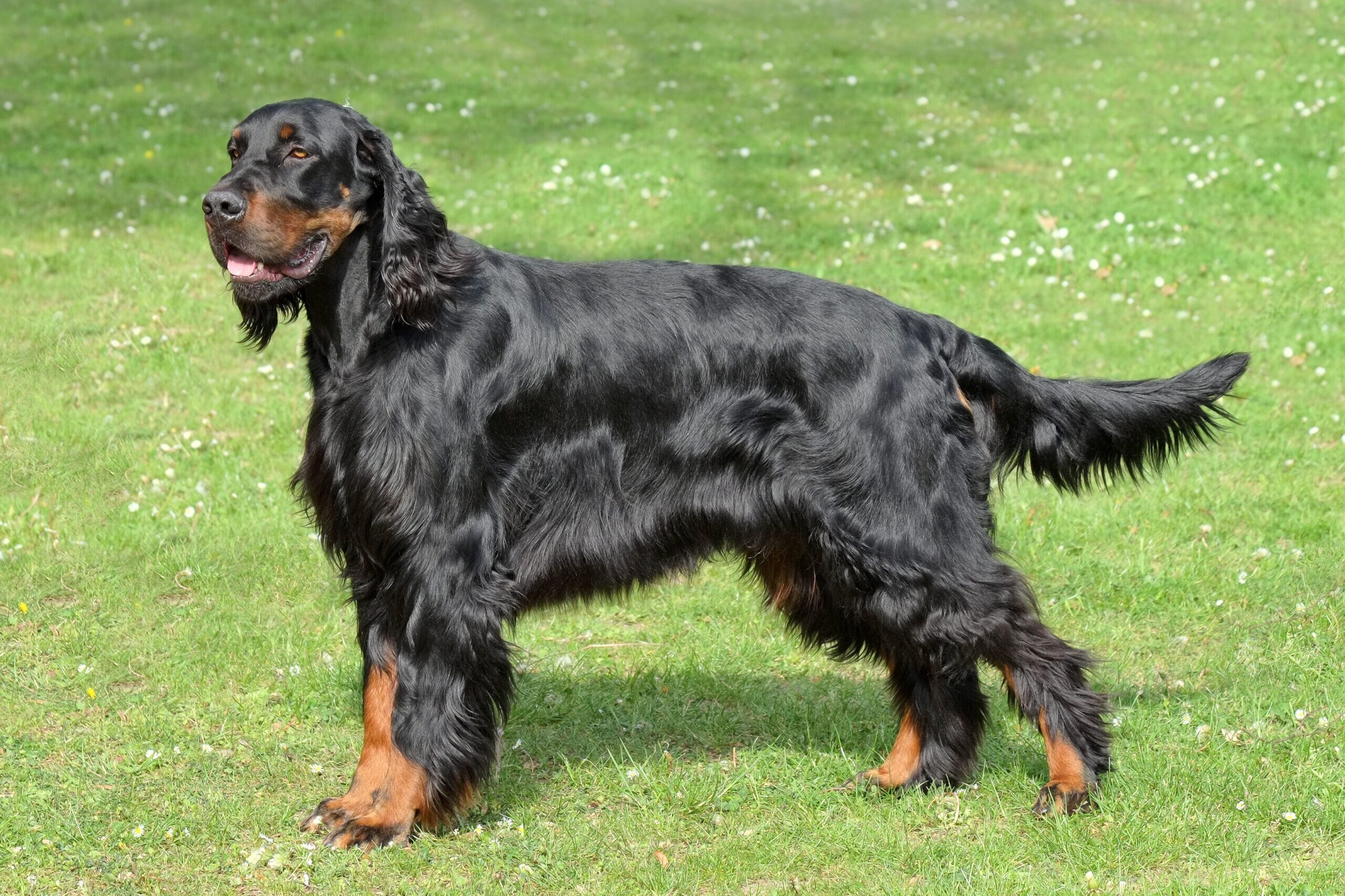
The Gordon Setter is the largest and most substantial of the setter breeds, distinguished by its striking black and tan coat. Bred in Scotland for stamina in the field, they combine beauty, intelligence, and devoted loyalty.
History
Developed at Gordon Castle in Scotland by the 4th Duke of Gordon in the early 1800s. They were bred for their stamina and ability to hunt over Scotland's rugged terrain. One of the original AKC breeds recognized in 1884.
Appearance
Large, athletic, and solidly built with a beautiful coal-black coat highlighted by rich tan markings. Their long, silky coat features feathering on the ears, chest, belly, legs, and tail. Noble, intelligent expression.
Temperament
Devoted, bold, and confident. Gordon Setters are more protective and less outgoing than other setters, forming intensely loyal bonds with their families.
Personality Around Others
Reserved with strangers but devoted to family. Can be territorial. Good with children they know. May not tolerate unfamiliar dogs well.
Exercise Needs
High exercise needs — at least 1–1.5 hours daily. They have excellent stamina and enjoy long runs, hikes, and swimming.
Training
Intelligent but can be stubborn and independent. Patient, consistent training with positive methods works best. They mature slowly.
Grooming
Regular grooming needed. Brush 2–3 times weekly. Trim feathering as needed. Professional grooming every 6–8 weeks. Regular ear cleaning.
Health
Common Health Conditions
Generally healthy but bloat is a serious concern. Eye and hip screenings are important. Their deep chest increases bloat risk.
Recommended Health Tests
- Hip Evaluation
- Ophthalmologist Evaluation
- Elbow Evaluation
Average Annual Vet Cost
$400–$900
Nutrition
High-quality large-breed food. About 2–3 cups daily in two meals. Use slow-feeder bowls for bloat prevention.
Living Environment
Need a house with a yard. Not suited for apartments. They need outdoor space for their athletic build.
Ideal Family
Best for experienced owners who appreciate a loyal, protective companion. Great for active families with older children.
Intelligence
Highly intelligent but applies it on their terms. Excellent problem-solvers with strong field instincts. They think independently.
Barking
Frequency
Alert
Separation
Quiet Indoors
Moderate barkers with good watchdog instincts. They alert to unusual activity but are not excessive.
Shedding
Year-Round
Seasonal
Vacuum Factor 🧹
Hypoallergenic
Moderate shedding with seasonal increases. Regular brushing manages their long, silky coat.
Weather Tolerance
☀️
Heat
❄️
Cold
🌧️
Rain
🌨️
Snow
💧
Humidity
Breed Ratings
Fun Facts
Gordon Setters were developed at Gordon Castle in Scotland by the 4th Duke of Gordon.
They are the heaviest and most powerful of all setter breeds.
Daniel Webster helped establish the breed in America.
They were bred for stamina over speed — they can hunt all day.
Gordon Setters have one of the strongest hunting drives of any setter.
Famous Dogs
Doris
Award-winning Gordon Setter from the Gordon Castle kennels
Gordon Castle setters
The original breeding stock from the Duke of Gordon's estate
Common Myths
"Gordon Setters are too slow for hunting."
They were bred for endurance, not speed. They can hunt effectively all day over rough terrain, outlasting faster but less durable breeds.
"They are unfriendly dogs."
Gordons are devoted and affectionate with their families. They are simply more reserved with strangers than other setter breeds.
Frequently Asked Questions
How are Gordon Setters different from other setters?
Gordons are larger, more protective, and more reserved than English or Irish Setters. They have a distinctive black and tan coat and stronger guarding instincts.
Do they need a lot of grooming?
Yes, their long, silky coat requires regular brushing and occasional professional grooming to prevent matting.
Puppy Guide
Gordon puppies mature slowly. Start socialization early due to their reserved nature. Use positive, patient training methods. They can be mouthy.
Senior Care
Senior Gordons may develop joint and thyroid issues. Maintain moderate exercise. Continue grooming routines. Watch for bloat symptoms.
Ownership Costs
Estimated Lifetime Cost
$16,000–$25,000
Pros and Cons
Pros
Deeply loyal and devoted
Beautiful black and tan coat
Excellent stamina for outdoor activities
Good watchdog instincts
Healthy and long-lived
Cons
Can be stubborn in training
Reserved with strangers
High grooming requirements
Needs significant exercise
Slow to mature