
Briard
Also known as: Berger de Brie, Chien de Brie
Energy Level
Apartment Friendly
Weight (Male)
55-100 lbs
Height (Male)
23-27 inches
Quick Facts
Coat Colors
Breed Summary
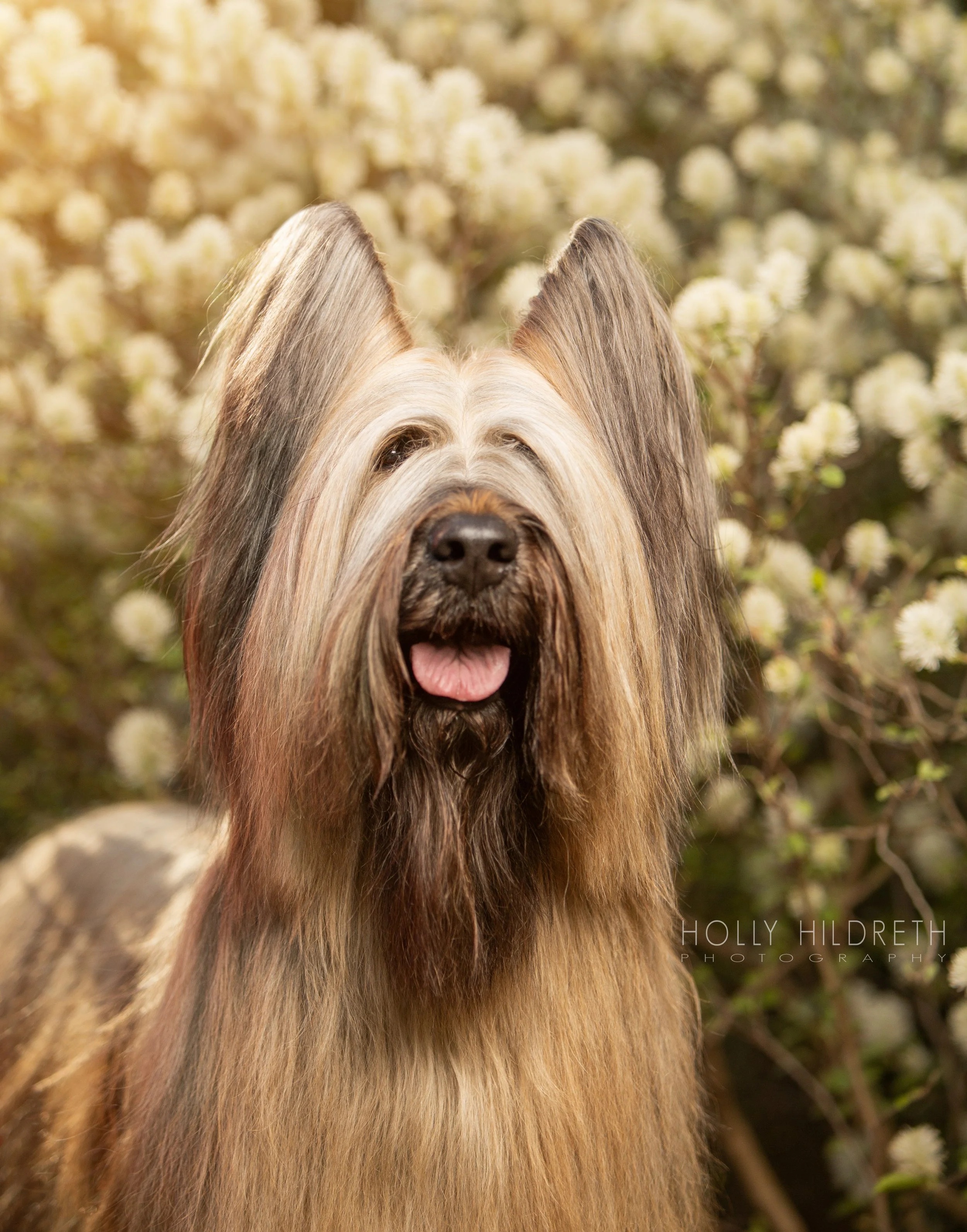
The Briard is a large, elegant French herding breed with a flowing coat and confident spirit. Known as "a heart wrapped in fur," they are loyal, brave, and deeply devoted.
History
An ancient French breed used for herding and guarding since at least the 8th century. Charlemagne and Napoleon reportedly owned Briards. Used in WWI and WWII as sentries and messengers. AKC recognized in 1928.
Appearance
A large, powerful, agile dog with a long, slightly wavy coat. Double dewclaws on hind legs. Peek-a-boo expression through coat. Proud, noble carriage. Well-muscled under the coat.
Temperament
Loyal, brave, and spirited. Briards are described as "a heart wrapped in fur." They are deeply devoted to family, protective, and have a strong, independent character.
Personality Around Others
Intensely devoted to family. Protective of children. Reserved with strangers. Can be dog-selective.
Exercise Needs
High exercise needs. Daily vigorous activity. Love herding, agility, and hiking. Need mental stimulation.
Training
Intelligent and willing but independent. Need firm, patient training. Respond to respect-based methods.
Grooming
High grooming needs. Daily brushing essential. Professional grooming regularly. Coat collects debris.
Health
Common Health Conditions
Generally healthy. Night blindness is a breed-specific concern. Regular health screening important.
Recommended Health Tests
- Hip Evaluation
- Ophthalmologist Evaluation
- CSNB DNA Test
- Thyroid Evaluation
Average Annual Vet Cost
$600-$1,200
Nutrition
Quality food for large, active breeds. Two meals daily. Monitor for bloat risk—avoid exercise after eating.
Living Environment
Need space. Not apartment dogs. Large yard essential. Thrive with active families.
Ideal Family
Experienced owners who appreciate independence. Active families. Those wanting a devoted guardian.
Intelligence
Highly intelligent with strong memory. Independent thinkers. Need purpose and engagement.
Barking
Frequency
Alert
Separation
Quiet Indoors
Moderate barkers. Alert to visitors and threats. Deep, commanding bark.
Shedding
Year-Round
Seasonal
Vacuum Factor 🧹
Hypoallergenic
Moderate shedding. Long coat traps loose hair. Daily grooming manages shedding.
Weather Tolerance
☀️
Heat
❄️
Cold
🌧️
Rain
🌨️
Snow
💧
Humidity
Breed Ratings
Fun Facts
Called "a heart wrapped in fur" due to their deep devotion
Napoleon, Charlemagne, and Thomas Jefferson all reportedly owned Briards
Served as military dogs in both World Wars, finding wounded soldiers
They have double dewclaws on hind legs, like the Beauceron
The original breed standard was written in 1897
Famous Dogs
Lafayette's Briards
Marquis de Lafayette reportedly brought Briards to America as gifts to Thomas Jefferson
WWI Briards
Served as sentries, messengers, and search dogs—finding wounded soldiers on the battlefield
Common Myths
"They can't see through their coat"
They see perfectly well. The coat over their eyes provides protection from sun glare and debris
"They are just big shaggy dogs"
Beneath the coat is a powerful, athletic herding dog with impressive working ability
Frequently Asked Questions
Are Briards related to Beaucerons?
Both are French herding breeds with double dewclaws. Briards have long coats while Beaucerons have short coats. They're considered long and short-coated versions of the same ancestral type.
How much grooming do they need?
Daily brushing is essential to prevent matting. Professional grooming every 6-8 weeks. It's a significant time commitment.
Puppy Guide
Briard puppies are playful and strong-willed. Start training and socialization early. Establish leadership.
Senior Care
Senior Briards remain devoted. Moderate exercise. Watch for eye and joint issues. Continued grooming.
Ownership Costs
Estimated Lifetime Cost
$18,000-$28,000
Pros and Cons
Pros
Deeply devoted
Brave and protective
Beautiful appearance
Intelligent worker
Historic breed
Cons
Very high grooming needs
Can be independent
Needs experienced owner
Needs space
Can be dog-selective