
Basenji
Also known as: African Bush Dog, Congo Dog, African Barkless Dog
Energy Level
Apartment Friendly
Weight (Male)
24 lbs
Height (Male)
17 inches
Quick Facts
Coat Colors
Breed Summary
The Basenji is a unique, ancient breed from Central Africa known as the "barkless dog." Instead of barking, they produce a distinctive yodel-like sound called a barroo. Intelligent, independent, and cat-like in their grooming habits, Basenjis are fascinating companions.
History
One of the oldest domesticated dog breeds, Basenjis were used by Central African tribes for hunting and pest control. They appear in ancient Egyptian art. The first successful imports to the West occurred in the 1930s, with AKC recognition in 1943.
Appearance
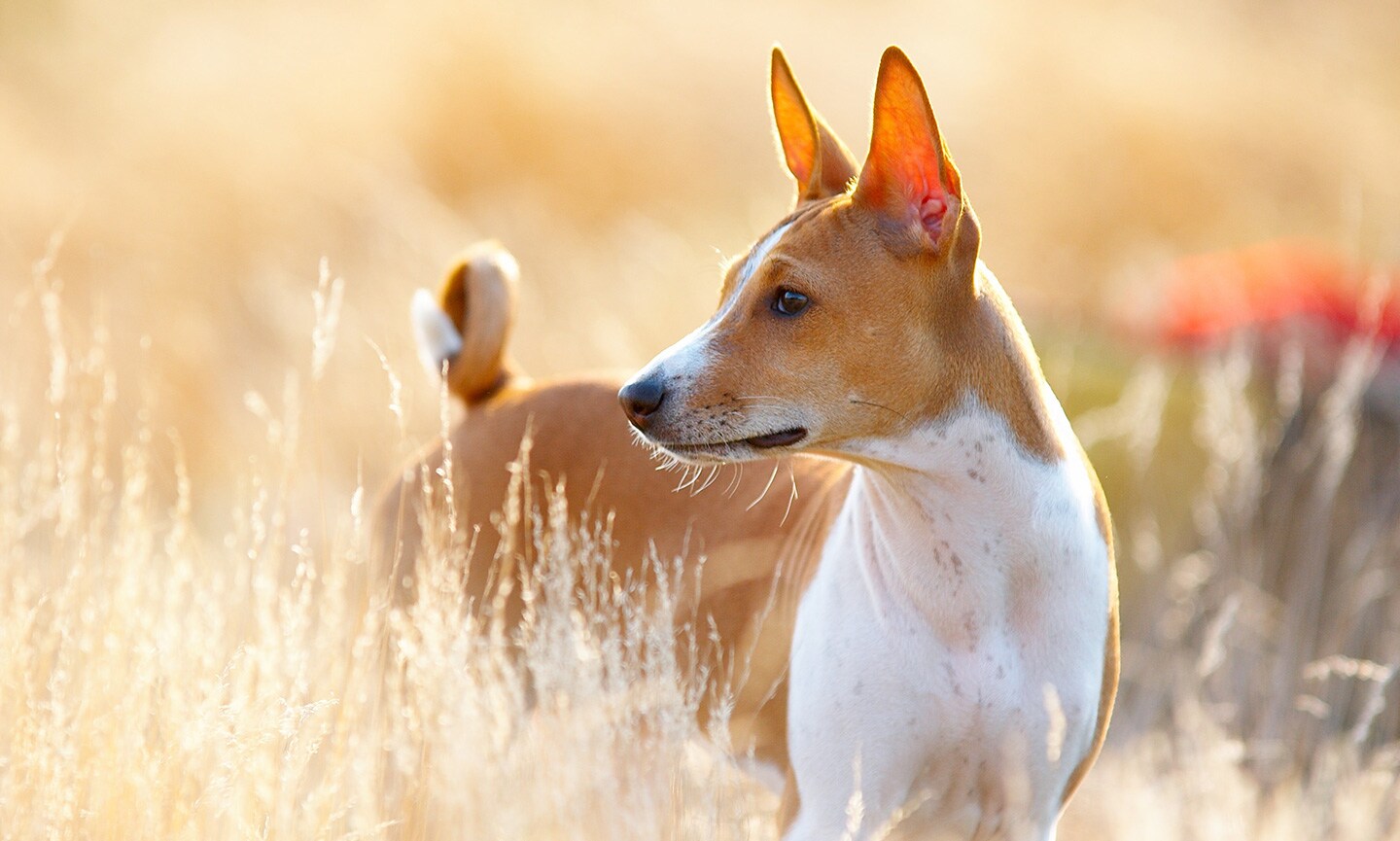
A small, elegant, athletic dog with a wrinkled forehead, erect ears, and a tightly curled tail. Their short, fine coat comes in distinctive color patterns. They have a graceful, horse-like gait.
Temperament
Independent, curious, and intelligent, the Basenji has a cat-like personality. They groom themselves meticulously and can be aloof with strangers. They form strong bonds with their primary person but on their own terms.
Personality Around Others
Reserved with strangers but loyal to family. Can be challenging with other dogs if not well-socialized. Their prey drive is very strong. They can live with cats if raised together, which is unusual for a hound.
Exercise Needs
Moderate to high exercise needs—daily walks plus play sessions. They enjoy running and chasing games. Mental stimulation is equally important. A securely fenced yard is essential as they are escape artists.
Training
One of the most challenging breeds to train due to their extreme independence. They need motivation to comply. Very short, fun training sessions with high-value rewards work best. They excel at lure coursing.
Grooming
Extremely easy grooming—they clean themselves like cats. Weekly brushing and occasional baths are sufficient. They have virtually no doggy odor. Regular nail trims and dental care are the main requirements.
Health
Common Health Conditions
Fanconi Syndrome is the primary breed concern—a kidney disorder that is now DNA-testable. Responsible breeders test for this condition. Otherwise generally healthy with good longevity.
Recommended Health Tests
- Fanconi Syndrome DNA Test
- Hip Evaluation
- Ophthalmologist Evaluation
- Thyroid Evaluation
Average Annual Vet Cost
$900-$1,600
Nutrition
Basenjis do well on high-quality food but can be picky eaters. They tend to stay lean naturally. Two meals per day are recommended. Monitor for food guarding, which some Basenjis exhibit.
Living Environment
Adaptable to apartment living if well-exercised. They are quiet indoors (no barking) which suits apartment life. Must have secure fencing—they are incredible escape artists who can climb chain-link fences.
Ideal Family
Best for experienced owners who appreciate independent dogs. Suitable for families with older children. Singles or couples who want a unique, cat-like companion. Not ideal for first-time dog owners.
Intelligence
Extremely intelligent and quick learners, but they use their intelligence for their own purposes rather than to please their owners. They are problem-solvers and can figure out latches, gates, and containers.
Barking
Frequency
Alert
Separation
Quiet Indoors
Famous for not barking, instead producing a unique yodeling sound called a barroo. They can also scream, growl, and whine. Overall one of the quietest dog breeds.
Shedding
Year-Round
Seasonal
Vacuum Factor 🧹
Hypoallergenic
Very minimal shedding. Their short, fine coat produces little loose hair. One of the lowest-shedding breeds available.
Weather Tolerance
☀️
Heat
❄️
Cold
🌧️
Rain
🌨️
Snow
💧
Humidity
Breed Ratings
Fun Facts
Basenjis are one of the few breeds that come into heat only once a year
They are depicted in ancient Egyptian tombs dating back 5,000 years
They can climb chain-link fences like cats
The breed was rediscovered in the Congo in the 1930s after being lost to the Western world
Famous Dogs
Bois
One of the first Basenjis successfully bred in the Western world in the 1930s
Common Myths
"Basenjis are completely silent"
While they don't bark, they produce yodels, screams, whines, and other vocalizations
"They are wild and untrainable"
They are highly trainable with the right motivation, just very independent in choosing when to obey
Frequently Asked Questions
Do Basenjis really not bark?
They don't produce a traditional bark due to their uniquely shaped larynx, but they make various sounds including yodels and screams.
Are Basenjis hypoallergenic?
While they shed very little, no dog is truly hypoallergenic. They are a better choice for some allergy sufferers.
Adoption Tips
Puppy Guide
Basenji puppies are extremely curious and mischievous. Puppy-proof thoroughly—they will explore everything. Early socialization is critical. Begin training with positive methods from day one.
Senior Care
Senior Basenjis may develop Fanconi Syndrome, so regular urinalysis is important. They generally age well and remain active. Provide warm bedding as they are sensitive to cold.
Ownership Costs
Estimated Lifetime Cost
$15,000-$22,000
Pros and Cons
Pros
Virtually no barking
Minimal shedding and odor
Self-grooming like a cat
Highly intelligent
Cons
Extremely independent and stubborn
Expert escape artists
Strong prey drive
Not ideal for first-time owners