
Australian Shepherd
Also known as: Aussie
Energy Level
Apartment Friendly
Weight (Male)
50–65 lbs
Height (Male)
20–23 inches
Quick Facts
Coat Colors
Breed Summary
The Australian Shepherd is a strikingly beautiful and remarkably intelligent herding breed that, despite its name, was developed in the American West. Known for their mesmerizing merle coats and often heterochromatic eyes, Aussies are athletic, driven dogs that excel in virtually every canine activity. They bond deeply with their families and need both physical and mental stimulation to thrive.
History
Despite their name, Australian Shepherds were developed in the western United States during the 19th century. The breed's ancestors may have come from the Basque region of Spain, traveling through Australia before arriving in America — hence the misleading name. They became indispensable ranch dogs in the American West, prized for their herding ability, intelligence, and versatility. Their popularity soared after World War II through appearances in rodeos and Western movies.
Appearance
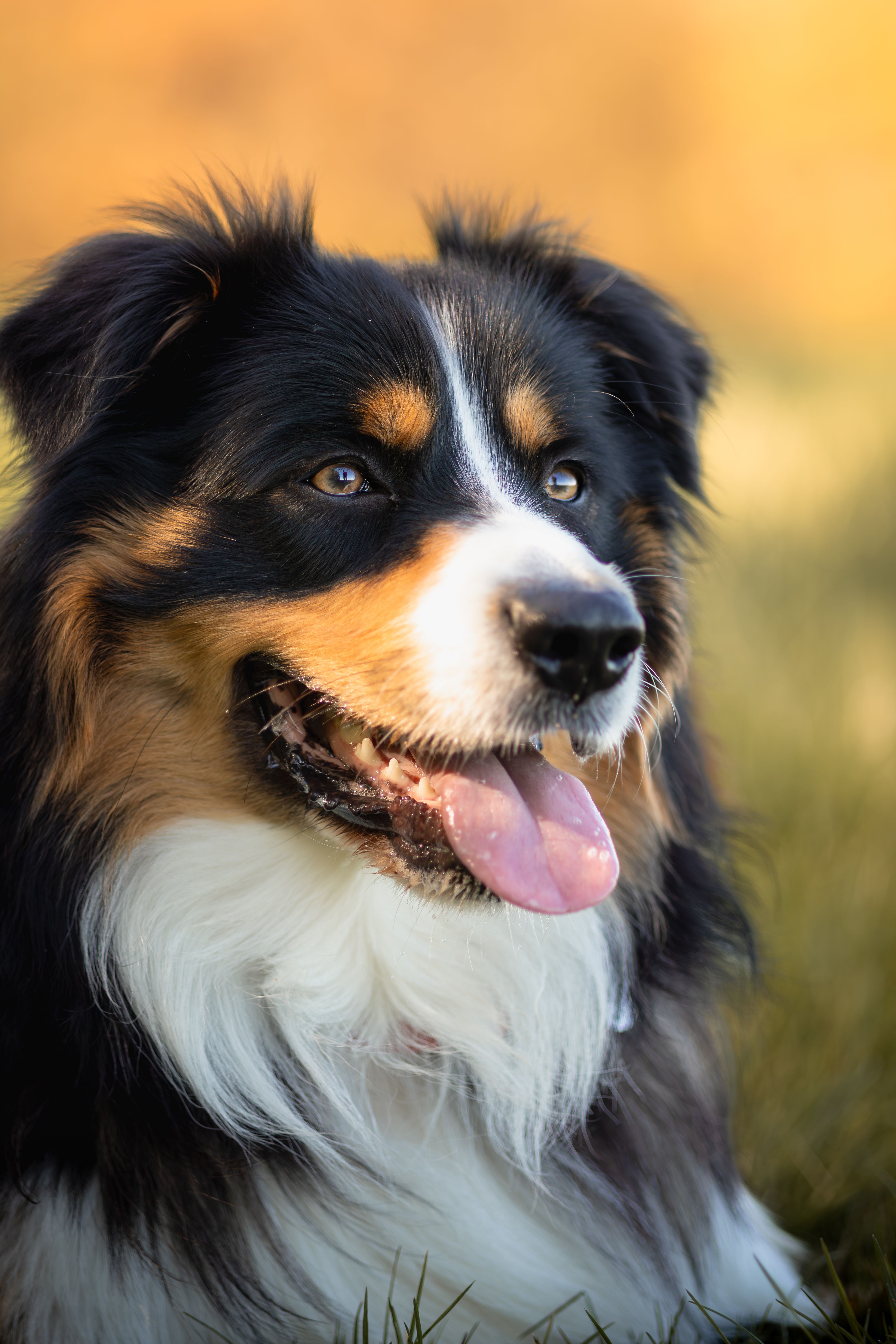
Aussies are well-balanced, medium-sized dogs with a moderately long coat that comes in striking colors and patterns. Their most eye-catching feature is their eyes, which can be blue, brown, amber, or any combination — including heterochromia (two different-colored eyes). Their merle coat pattern creates a marbled effect that is unique to each dog. They have a natural or docked bobtail and move with an agile, ground-covering gait.
Temperament
Aussies are intensely loyal, smart, and driven dogs. They have a strong work ethic and need a sense of purpose. They are affectionate with their families but can be reserved with strangers. Their herding instincts are strong, and they may try to herd children, pets, and even adults. They thrive on mental challenges and close companionship.
Personality Around Others
Aussies can be reserved with strangers and may take time to warm up. They are generally good with children but may herd them. They can coexist with other dogs when properly socialized. Their protective nature makes them alert to unfamiliar situations. Early socialization is crucial to prevent shyness.
Exercise Needs
Very high exercise needs — Aussies need 1–2 hours of vigorous activity daily. They excel in agility, herding, flyball, disc dog, and hiking. Mental stimulation through training, puzzle toys, and learning new skills is equally important. Without sufficient outlets, they become destructive and anxious.
Training
Exceptionally trainable and eager to work. Aussies learn quickly and can master complex commands. They respond beautifully to positive reinforcement and love the training process itself. Early socialization and puppy classes are recommended. They excel in competitive obedience and agility.
Grooming
Moderate grooming needs. Their double coat requires brushing 2–3 times weekly, with daily brushing during shedding season. They shed heavily twice a year. Regular ear cleaning and dental care are important. Professional grooming every 6–8 weeks helps manage their coat.
Health
Common Health Conditions
Generally healthy but prone to eye issues and joint problems. The MDR1 gene mutation can cause dangerous reactions to certain medications. Responsible breeders test for these conditions. Their active lifestyle helps maintain physical condition.
Recommended Health Tests
- Hip Evaluation
- Ophthalmologist Evaluation
- MDR1 DNA Test
- Collie Eye Anomaly DNA Test
Average Annual Vet Cost
$500–$1,200
Nutrition
Feed a high-quality, high-protein food for active breeds. Aussies need 1.5–2.5 cups daily, adjusted for activity level. Working dogs may need more calories. Feed in two meals. Ensure adequate hydration during exercise.
Living Environment
Not suitable for apartments. Aussies need a house with a large yard and access to open spaces. They thrive in rural or suburban settings where they have room to run. They should live indoors with their family.
Ideal Family
Best for active individuals and families who enjoy outdoor activities. Excellent for those interested in dog sports. Not suitable for sedentary households or owners who are away from home frequently. Experienced owners preferred.
Intelligence
Australian Shepherds are among the most intelligent dog breeds, ranking consistently in the top 20. They can learn complex commands quickly and solve problems independently. Their intelligence requires channeling through training and activities.
Barking
Frequency
Alert
Separation
Quiet Indoors
Moderate barkers who alert bark and vocalize when working or excited. Training helps manage excessive barking. They are quieter indoors when properly exercised.
Shedding
Year-Round
Seasonal
Vacuum Factor 🧹
Hypoallergenic
Moderate to heavy shedders with significant seasonal coat blowing twice yearly. Regular brushing helps manage the volume.
Weather Tolerance
☀️
Heat
❄️
Cold
🌧️
Rain
🌨️
Snow
💧
Humidity
Breed Ratings
Fun Facts
Aussies often have heterochromia — two different-colored eyes.
Despite their name, they were developed in the American West, not Australia.
They were popular trick dogs in rodeos and Western movies.
An Aussie named Hyper Hank was a famous Frisbee-catching dog in the 1970s.
Native Americans called them 'ghost eye dogs' due to their pale blue eyes.
Famous Dogs
Hyper Hank
Famous Frisbee dog who performed at the Super Bowl
Stub
Jay Sisler's trick dog who appeared in Disney films
Common Myths
"Australian Shepherds are from Australia."
They were developed in the western United States. The name likely comes from their association with Basque shepherds who came to America from Australia.
"All Aussies have blue eyes."
While blue eyes and heterochromia are common, many Aussies have brown, amber, or green eyes.
Frequently Asked Questions
Are Australian Shepherds good family dogs?
Yes, for active families. They need extensive exercise and mental stimulation but are loyal, protective, and great with children when properly socialized.
Do Australian Shepherds need a job?
They thrive with a sense of purpose. If not herding, activities like agility, obedience, fetch, or puzzle toys provide the mental stimulation they crave.
Adoption Tips
Puppy Guide
Aussie puppies are energetic and need early training and socialization. Begin positive reinforcement training immediately. Channel herding instincts into appropriate activities. Protect growing joints from high-impact exercise.
Senior Care
Senior Aussies may develop joint stiffness and vision problems. Continue moderate exercise and mental stimulation. Regular eye exams are important. Their need for companionship and purpose never diminishes.
Similar Breeds
Ownership Costs
Estimated Lifetime Cost
$15,000–$25,000
Pros and Cons
Pros
Exceptionally intelligent and trainable
Versatile in dog sports and activities
Loyal and devoted to family
Beautiful, striking appearance
Good health and longevity
Cons
Very high exercise requirements
Strong herding instincts (may herd children)
Heavy seasonal shedding
Can be reserved with strangers
Not suited for sedentary households