
Alaskan Malamute
Also known as: Mal, Mally
Energy Level
Apartment Friendly
Weight (Male)
85 lbs
Height (Male)
25 inches
Quick Facts
Coat Colors
Breed Summary
The Alaskan Malamute is a powerful, majestic Arctic sled dog built for hauling heavy freight. With their wolf-like appearance and loyal temperament, they are impressive companions for active families in cooler climates.
History
One of the oldest Arctic sled dogs, bred by the Mahlemut Inuit people of Alaska. Used for hauling heavy loads and as hunting companions. They served as sled dogs during the Klondike Gold Rush and both World Wars. AKC recognized in 1935.
Appearance
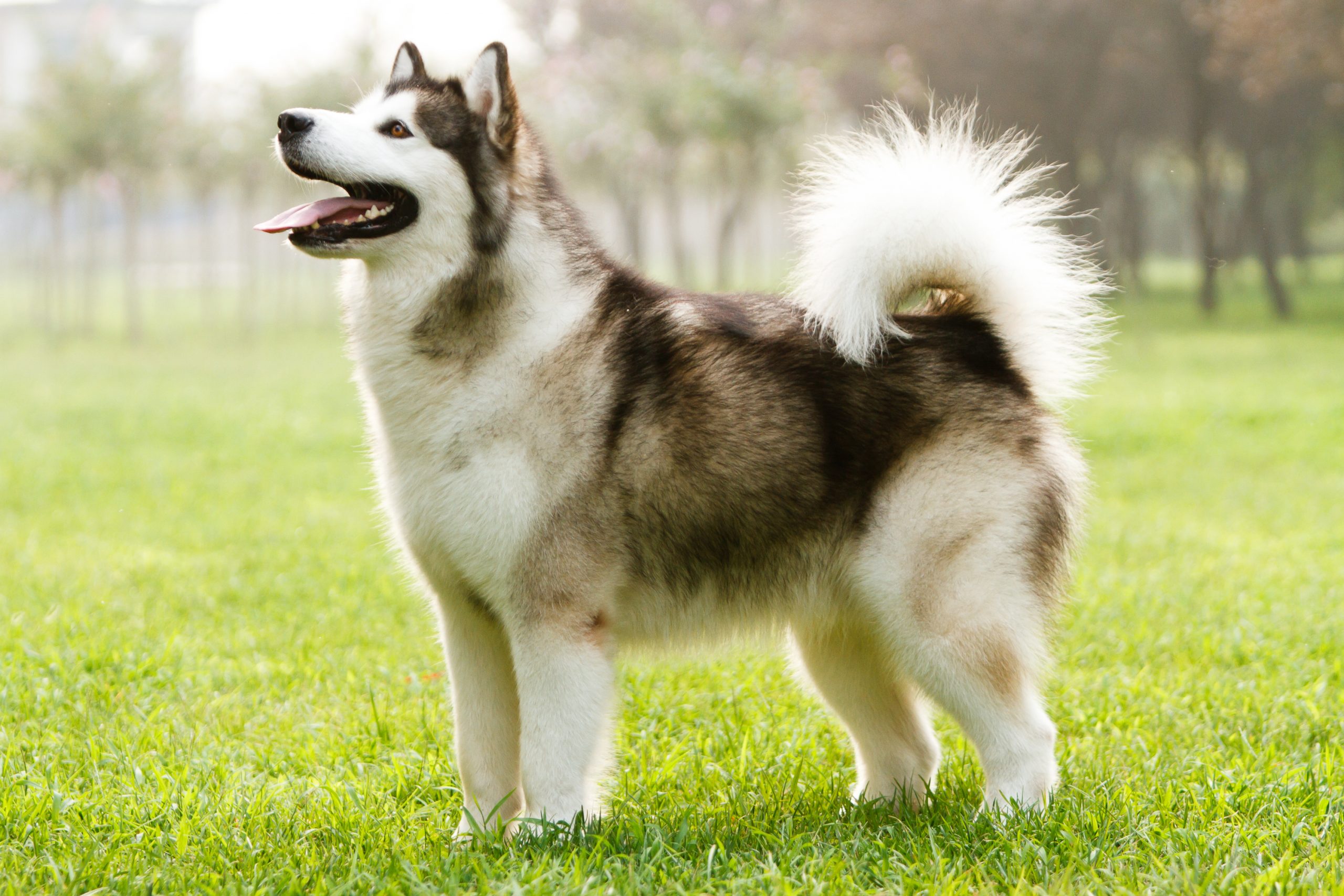
A large, powerful, heavily built dog with a broad head, erect ears, and a plumed tail carried over the back. Dense double coat, wolf-like facial markings, and a proud carriage.
Temperament
Affectionate, loyal, and playful, the Alaskan Malamute is a big, friendly dog that loves people. However, they are independent and can be strong-willed. They are pack-oriented and need a confident leader.
Personality Around Others
Friendly with people including strangers. Can be aggressive toward same-sex dogs and animals with prey drive. They are pack dogs that need to know their place in the family hierarchy.
Exercise Needs
Very high exercise needs—bred for endurance work. At least 1-2 hours of vigorous daily exercise. Love pulling, hiking, and cold-weather activities. Without exercise, they become destructive.
Training
Intelligent but stubborn. Need firm, consistent leadership. Positive reinforcement with an owner who establishes clear pack structure. Not suited for permissive owners.
Grooming
Heavy shedding requires frequent brushing—daily during seasonal blows. Their thick double coat should never be shaved. Regular nail, ear, and dental care.
Health
Common Health Conditions
Generally healthy but prone to joint issues and some genetic conditions. Chondrodysplasia (dwarfism) can occur. Regular screening is important.
Recommended Health Tests
- Hip Evaluation
- Ophthalmologist Evaluation
- Polyneuropathy DNA Test
Average Annual Vet Cost
$1,000-$1,800
Nutrition
Need high-quality food but can be surprisingly efficient eaters for their size. Two meals daily. They are prone to bloat, so avoid exercise near meals. Monitor weight carefully.
Living Environment
Not suited for apartments or warm climates. Need a house with a yard. They are escape artists—secure fencing is essential. Thrive in cold climates and love snow.
Ideal Family
Best for experienced owners who enjoy outdoor activities in cool climates. Active families with older children. Not ideal for first-time owners. Multi-dog households need careful management.
Intelligence
Highly intelligent but use their smarts for their own purposes. They are problem-solvers and escape artists. Training requires creativity and patience.
Barking
Frequency
Alert
Separation
Quiet Indoors
Not excessive barkers but known for "talking" with howls and woo-woo vocalizations. They communicate vocally and can be quite expressive.
Shedding
Year-Round
Seasonal
Vacuum Factor 🧹
Hypoallergenic
Extremely heavy shedders, especially during biannual coat blows. Daily brushing is essential during shedding season. Their undercoat comes out in clumps.
Weather Tolerance
☀️
Heat
❄️
Cold
🌧️
Rain
🌨️
Snow
💧
Humidity
Breed Ratings
Fun Facts
Malamutes helped Admiral Byrd's expedition to the South Pole
They can pull loads of up to 3,000 pounds
They are one of the oldest Arctic sled dog breeds
Unlike Huskies, Malamutes were bred for power rather than speed
Famous Dogs
Balto's teammates
While Balto was a Siberian Husky, Malamutes served alongside on many Arctic expeditions
Common Myths
"Malamutes and Huskies are the same breed"
Malamutes are larger, more powerful, and bred for hauling heavy loads, while Huskies are faster and lighter
"They can live in hot climates"
They struggle significantly in heat and are best suited for cooler climates
Frequently Asked Questions
Can Malamutes live in warm climates?
Not recommended. They are Arctic dogs that suffer in heat. Air conditioning and limited outdoor time in summer are essential if in warm areas.
Are they good with other dogs?
They can be aggressive toward same-sex dogs. Careful socialization and management are needed in multi-dog households.
Puppy Guide
Large, energetic puppies that grow rapidly. Start training and socialization early. Establish leadership from day one. Provide proper nutrition for slow, steady growth.
Senior Care
Senior Malamutes may develop joint issues. Provide supportive bedding. Continue moderate exercise. Keep them cool in warm weather. Their thick coat still requires regular grooming.
Ownership Costs
Estimated Lifetime Cost
$18,000-$28,000
Pros and Cons
Pros
Loyal and affectionate
Impressive, majestic appearance
Great for cold climates
Playful and fun-loving
Cons
Extremely heavy shedding
Not suited for warm climates
Can be dog-aggressive
Stubborn and independent