
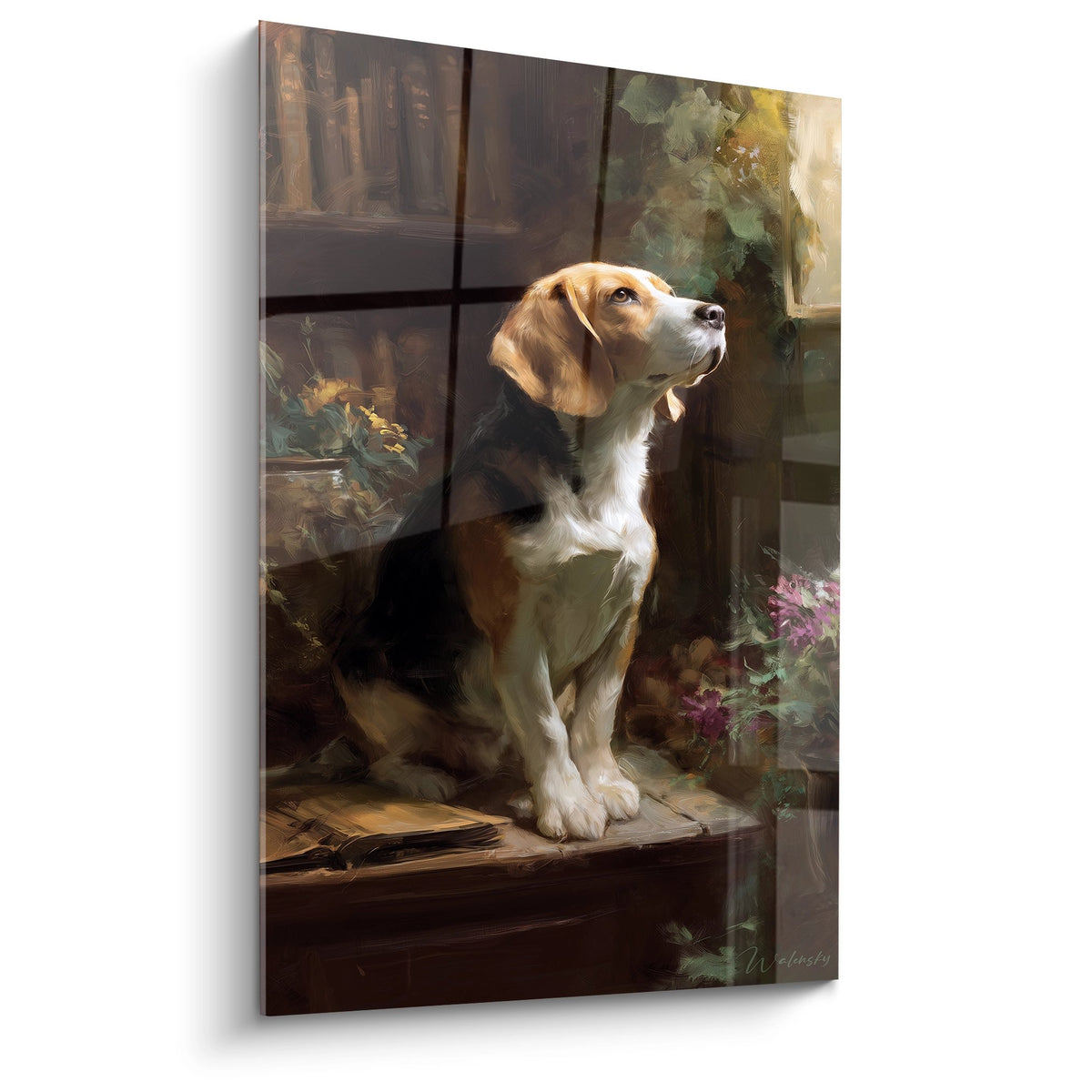
Beagle
También conocido como: English Beagle
Nivel de Energía
Apto Apartamento
Peso (Macho)
20–30 lbs (9–14 kg)
Altura (Macho)
13–15 inches (33–38 cm)
Datos Rápidos
Colores de Pelaje
Resumen de la Raza
El Beagle es una de las razas de sabuesos más queridas y reconocibles, conocido por su personalidad alegre, su extraordinario sentido del olfato y su constitución compacta y robusta. Criado originalmente para rastrear conejos y liebres en jaurías por la campiña inglesa, el Beagle ha evolucionado hasta convertirse en uno de los mejores perros de familia disponibles.
Los Beagles combinan una apariencia irresistiblemente tierna (esos expresivos ojos marrones, largas orejas caídas y una cola alegre con la punta blanca) con un temperamento alegre y curioso que se gana a todos los que conocen. Son lo suficientemente pequeños para vivir en un apartamento pero lo suficientemente robustos para las aventuras al aire libre, lo que los convierte en compañeros muy versátiles.
Los mayores puntos fuertes de la raza son su naturaleza amigable y no agresiva, su tamaño compacto y su salud resistente. Sin embargo, los Beagles se guían por su nariz (una de las mejores del mundo canino), lo que puede hacer que el entrenamiento de llamada sea un desafío. También son perros vocales cuyo característico aullido puede poner a prueba la paciencia de los vecinos.
Historia
La ascendencia del Beagle se remonta a más de 2,000 años; en los escritos de la antigua Grecia y Roma aparecen pequeños sabuesos similares a los Beagles modernos. La raza moderna fue desarrollada en Inglaterra durante la década de 1830 por el reverendo Phillip Honeywood, quien estableció una jauría de pequeños sabuesos para la caza de conejos.
El nombre "Beagle" puede provenir de la palabra francesa "begueule" (garganta abierta, en referencia al melodioso aullido de la raza), o de la palabra del inglés antiguo "beag" (pequeño). En la década de 1840, la raza se estaba estandarizando y llegó a América después de la Guerra Civil.
El AKC reconoció al Beagle en 1885. El presidente Lyndon B. Johnson tuvo varios Beagles (Him, Her y Edgar) que vivieron en la Casa Blanca. La raza se ha mantenido constantemente entre las 10 razas más populares del AKC. Hoy en día, los Beagles sirven como perros de detección para la "Beagle Brigade" del USDA, olfateando productos agrícolas prohibidos en los aeropuertos.
Apariencia
Los Beagles se presentan en dos variedades de tamaño: de 13 pulgadas (menos de 13 pulgadas, 20-25 lbs) y de 15 pulgadas (de 13 a 15 pulgadas, 25-30 lbs). Son sabuesos sólidos y robustos, con un cráneo ancho, orejas largas y caídas de inserción baja en la cabeza, y ojos grandes de color marrón o avellana que les otorgan su característica expresión de súplica.
El pelaje es corto, denso y resistente a la intemperie, perfecto para cazar en cualquier condición. El color más común es el clásico tricolor (negro, fuego y blanco), pero también se presentan en rojo y blanco, limón y blanco, y otras combinaciones. Llevan la cola en alto con la punta blanca (la "bandera"), lo que históricamente ayudaba a los cazadores a localizar al perro entre la hierba alta.
Temperamento
Los Beagles son perros alegres, amigables y sumamente curiosos, guiados por su extraordinario sentido del olfato. Afrontan la vida con un entusiasmo alegre que resulta contagioso: la cola meneándose de un Beagle y sus ojos expresivos pueden alegrar el día de cualquiera. Son perros de jauría por naturaleza y prosperan con la compañía, ya sea de humanos, de otros perros o incluso de gatos.
Su inteligencia es real, pero se manifiesta de manera diferente a la de razas como los Poodles o los Border Collies. Los Beagles son pensadores independientes criados para seguir su nariz sin la intervención del guía. Esto significa que pueden ser tercos en el entrenamiento: entienden lo que quieres, pero es posible que no estén de acuerdo en que sea más interesante que el rastro que están siguiendo.
Los Beagles son notablemente no agresivos y rara vez muestran un comportamiento territorial, lo que los hace seguros con los niños y otros animales. Sin embargo, su mentalidad de perro de jauría significa que no toleran bien la soledad; un Beagle solitario y aburrido aullará, cavará y destruirá cosas para sobrellevar la soledad.
Personalidad con Otros
Los Beagles son universalmente sociales. Adoran a los niños y son compañeros pacientes y juguetones para niños de todas las edades. Su constitución robusta soporta bien los juegos bruscos. Reciben con entusiasmo a otros perros; los Beagles son animales de jauría de corazón y, por lo general, prefieren tener compañeros caninos. Los gatos suelen ser aceptados, especialmente cuando se crían juntos. A los extraños los saludan como amigos. Los Beagles son pésimos perros guardianes: es más probable que guíen a un ladrón hacia los bocadillos que a dar una alarma (bueno, aullarán, pero a todo).
Necesidades de Ejercicio
Los Beagles necesitan de 45-60 minutos de ejercicio diario. Su herencia de caza les otorga una resistencia impresionante para su tamaño. Los paseos diarios, correr sin correa en áreas seguras y las actividades basadas en el olfato son ideales. CRÍTICO: Los Beagles NUNCA deben soltarse sin correa en áreas no aseguradas; una vez que se concentran en un olor, lo seguirán con determinación ciega, sordos a las órdenes de llamada. Un patio con una cerca segura es esencial. El trabajo de olfato y los juegos de rastreo proporcionan una excelente estimulación mental.
Entrenamiento
Entrenar a un Beagle requiere paciencia, constancia y sentido del humor. Su independencia guiada por el olfato los convierte en una de las razas más desafiantes de entrenar, pero no son poco inteligentes: son selectivamente obedientes. La motivación por la comida es tu mejor herramienta. Las sesiones cortas y dinámicas con premios de alto valor producen los mejores resultados. El entrenamiento de llamada es el mayor desafío: un Beagle en un rastro de olor puede no responder a ninguna orden. El entrenamiento para ir al baño es moderadamente difícil. El entrenamiento con jaula funciona bien.
Aseo
El aseo del Beagle es mínimo y sencillo. Cepíllalo una o dos veces por semana con un guante para sabuesos o un cepillo de cerdas. Mudan de pelo moderadamente durante todo el año, con una muda más intensa en primavera. Baños cada 4-6 semanas o según sea necesario; los Beagles pueden desarrollar un "olor a sabueso". Las orejas requieren una limpieza semanal: esas orejas largas y caídas atrapan la humedad y la suciedad, lo que convierte a las infecciones de oído en la preocupación número uno del aseo. El cuidado dental regular y el corte de uñas completan la rutina.
Salud
Condiciones Comunes
Los Beagles son generalmente perros sanos con una larga esperanza de vida de 10-15 años. Las infecciones de oído son el problema recurrente más común debido a sus orejas caídas. La epilepsia ocurre con más frecuencia en los Beagles que en muchas otras razas. La obesidad es una preocupación importante: los Beagles están obsesionados con la comida y comerán en exceso si se les da la oportunidad. La IVDD puede afectar la columna vertebral. El cuidado veterinario regular y mantener un peso saludable previenen la mayoría de los problemas graves.
Pruebas de Salud Recomendadas
- Evaluación de Cadera
- Evaluación Oftalmológica
- Prueba de ADN para MLS
- Examen Cardíaco
- Evaluación de Tiroides
Costo Veterinario Anual Promedio
$400–$700
Nutrición
Los Beagles necesitan un control estricto de las porciones: se encuentran entre las razas más motivadas por la comida y comerán hasta que físicamente no puedan consumir más. Los adultos suelen necesitar entre 900-1,100 calorías diarias. NUNCA dejes comida a libre disposición para un Beagle. Mide todas las porciones con precisión. Utiliza juguetes interactivos dispensadores de comida para ralentizar la ingesta y proporcionar estimulación mental. Robar comida de las encimeras y asaltar la basura son especialidades del Beagle; asegura todas las fuentes de comida. Las proteínas de alta calidad con grasa moderada respaldan su estilo de vida activo.
Entorno de Vida
Los Beagles pueden adaptarse a la vida en un apartamento SI reciben el ejercicio diario adecuado y no se les deja solos durante largos períodos (por los ladridos y aullidos). Una casa con un patio cercado de forma segura es ideal; la cerca debe ser sólida y extenderse bajo tierra, ya que los Beagles son excavadores expertos. Toleran bien la mayoría de los climas gracias a su pelaje resistente a la intemperie. Son perros de interior y exterior que deben dormir dentro de casa con su familia.
Familia Ideal
Los Beagles son ideales para familias con niños, hogares con múltiples mascotas y personas activas que disfrutan de las caminatas y las actividades al aire libre. Son excelentes para dueños primerizos que desean un perro amigable y de tamaño manejable. Se adaptan bien a casas suburbanas con patio. NO son ideales para: dueños que desean confiabilidad sin correa, habitantes de apartamentos sensibles al ruido, personas que están fuera de casa todo el día o aquellos que buscan un perro con baja motivación por la comida.
Inteligencia
Los Beagles se sitúan alrededor del puesto 72 en inteligencia de obediencia, pero esto es engañoso. Su clasificación "baja" refleja independencia, no incapacidad. Los Beagles poseen una inteligencia excepcional para el rastreo de olores (el segundo mejor olfato en el mundo canino después del Bloodhound), habilidades de resolución de problemas para conseguir comida y una sólida memoria espacial. Simplemente priorizan su nariz sobre las órdenes de su dueño.
Ladrido
Frecuencia
Alerta
Separación
Silencio Interior
Los Beagles son perros VOCALES. Tienen tres vocalizaciones distintas: un ladrido estándar, un aullido melodioso tipo canto tirolés y un aullido común. Ladran a las ardillas, a los carteros, a otros perros, a los olores interesantes y, a veces, a nada en absoluto. La ansiedad por separación amplifica significativamente sus vocalizaciones.
Muda de Pelo
Todo el Año
Estacional
Factor Aspiradora
Hipoalergénico
Los Beagles mudan de pelo moderadamente durante todo el año, con una muda más intensa en primavera. Su pelaje corto hace que la pérdida de pelo sea menos dramática visualmente que en las razas de pelo largo, pero esos pequeños pelos se incrustan con facilidad en los muebles y la ropa. El cepillado regular ayuda a controlar la muda.
Tolerancia Climática
☀️
Calor
❄️
Frío
🌧️
Lluvia
🌨️
Nieve
💧
Humedad
Calificaciones de la Raza
Datos Curiosos
Los Beagles tienen aproximadamente 220 millones de receptores olfativos, el segundo mejor olfato de cualquier raza de perro.
La "Beagle Brigade" del USDA utiliza Beagles en los aeropuertos para detectar productos agrícolas prohibidos.
Snoopy, el Beagle más famoso del mundo, apareció por primera vez en las tiras cómicas de Peanuts en 1950.
Una Beagle llamada Miss P ganó el premio Best in Show en Westminster en 2015.
Las colas de los Beagles siempre tienen la punta blanca ("la bandera"), una característica criada para que los cazadores pudieran localizarlos entre la hierba alta.
La reina Isabel I tenía jaurías de "Pocket Beagles", lo suficientemente pequeños como para caber en las alforjas de montar.
Los Beagles son la raza más utilizada en pruebas de laboratorio debido a su naturaleza dócil y confiada.
Los Beagles del presidente Lyndon B. Johnson, Him y Her, vivieron en la Casa Blanca.
Perros Famosos
Snoopy
El perro de ficción más famoso del mundo, de la tira cómica Peanuts
Him and Her
Los Beagles de la Casa Blanca del presidente Lyndon B. Johnson
Miss P
Ganador del Best in Show del Westminster Kennel Club, 2015
Uno
Primer Beagle en ganar el Best in Show en Westminster, 2008
Shiloh
Personaje principal del querido libro infantil y película
Mitos Comunes
"Los Beagles son imposibles de entrenar."
Los Beagles se pueden entrenar con éxito con paciencia, constancia y recompensas de comida. Tienen una mentalidad independiente, no es que sean poco inteligentes. El entrenamiento simplemente requiere más tiempo que con las razas criadas para la obediencia.
"Los Beagles solo son aptos para la caza."
Aunque son excelentes cazadores, los Beagles son maravillosos perros de familia, perros de terapia y perros de detección. Su naturaleza amigable se adapta a muchas funciones.
"Se puede confiar en los Beagles sin correa."
Generalmente no. La mayoría de los Beagles seguirán un olor interesante sin importar el entrenamiento de llamada. Lleva siempre a tu Beagle con correa o mantenlo en un patio cercado de forma segura.
Preguntas Frecuentes
¿Son los Beagles buenos perros de familia?
¡Excelente! Los Beagles se encuentran entre los mejores perros de familia: amigables, pacientes con los niños, robustos y no agresivos.
¿Ladran mucho los Beagles?
Sí. Los Beagles son perros vocales con un aullido característico. Esto puede ser un desafío en apartamentos o vecindarios cerrados.
¿Se puede dejar a los Beagles solos?
Los Beagles no toleran bien la soledad por largos períodos. Son animales de jauría propensos a la ansiedad por separación, que se manifiesta en forma de aullidos y comportamiento destructivo.
¿Son los Beagles buenos con otros perros?
¡Excelente! Los Beagles son animales de jauría que generalmente adoran a otros perros. A menudo les va mejor en hogares con varios perros.
¿Por qué aúllan los Beagles?
El aullido es un rasgo innato de su herencia de caza. Los Beagles aúllan para comunicarse, cuando se sienten solos, cuando están emocionados y, a veces, simplemente porque sí.
Consejos de Adopción
Los rescates de Beagles incluyen el National Beagle Club Rescue y organizaciones regionales. Muchos Beagles retirados de laboratorios están disponibles a través de organizaciones como el Beagle Freedom Project; estos perros se convierten en compañeros maravillosos y agradecidos. Pregunta sobre los niveles de ruido, la agresión por comida (común debido a su obsesión por el alimento) y el comportamiento sin correa.
Guía de Cachorro
Los cachorros de Beagle son adorables, enérgicos y traviesos. La socialización es importante, aunque los Beagles son amigables por naturaleza. Comienza a proteger tu hogar a prueba de olores: los cachorros de Beagle encontrarán y comerán cualquier cosa que huela a algo. El entrenamiento con jaula funciona bien. El entrenamiento para ir al baño puede tomar de 4-6 meses. Comienza el entrenamiento de llamada temprano, aunque maneja tus expectativas. Los cachorros alcanzan su tamaño completo entre los 12-15 meses.
Cuidado de Adulto Mayor
Los Beagles mayores (de 8+ años) suelen desarrollar hipotiroidismo, aumento de peso y rigidez articular. Mantén un control estricto de las porciones a medida que el metabolismo se ralentiza. Los suplementos articulares ayudan a la movilidad. El oído y la visión pueden disminuir. Controles veterinarios regulares cada 6 meses. Los Beagles mayores siguen obsesionados con la comida, por lo que el control del peso es la máxima prioridad para evitar el estrés articular relacionado con la obesidad.
Razas Similares
Basset Hound
Menor energía, más pesado, con orejas aún más largas. Personalidad similar guiada por el olfato pero más tranquila.
Harrier
Versión más grande del Beagle con más resistencia. Temperamento similar pero menos común.
Foxhound
Sabueso de jauría más grande y enérgico. Herencia de caza similar pero necesita más espacio y ejercicio.
Dachshund
Sabueso más pequeño y más independiente. Terquedad similar pero diferente tipo de cuerpo y necesidades de ejercicio.
Costos de Propiedad
Costo Estimado de por Vida
$12,000–$20,000
Pros y Contras
Ventajas
Excepcionalmente amigable y no agresivo
Excelente con los niños y otras mascotas
Tamaño compacto, robusto y manejable
Salud resistente y larga esperanza de vida
Bajas necesidades de aseo
Personalidad alegre y entretenida
Excelente capacidad olfativa para actividades de trabajo de olfato
Asequible en comparación con muchas razas populares
Desventajas
Extremadamente vocal: los ladridos y aullidos pueden ser excesivos
No se puede confiar en ellos sin correa debido a su tendencia a deambular siguiendo rastros
Terco y desafiante de entrenar
La obsesión por la comida conduce a la obesidad
Propenso a la ansiedad por separación
Olor a sabueso sin baños regulares
El instinto de excavar puede destruir los patios
Infecciones de oído debido a sus orejas largas y caídas