
Japanese Chin
Also known as: Japanese Spaniel, Chin
Energy Level
Apartment Friendly
Weight (Male)
7-11 lbs
Height (Male)
8-11 inches
Quick Facts
Coat Colors
Breed Summary
The Japanese Chin is an aristocratic, cat-like toy breed that has been a companion of Japanese royalty for centuries. Elegant, quiet, and fastidious, they are often described as the most cat-like of all dog breeds.
History
Ancient breed from the Japanese imperial court. Given as gifts to diplomats and foreign dignitaries. Commodore Perry brought them to the West in 1853. Prized for centuries as lap dogs of Japanese nobility. AKC recognized in 1888.
Appearance
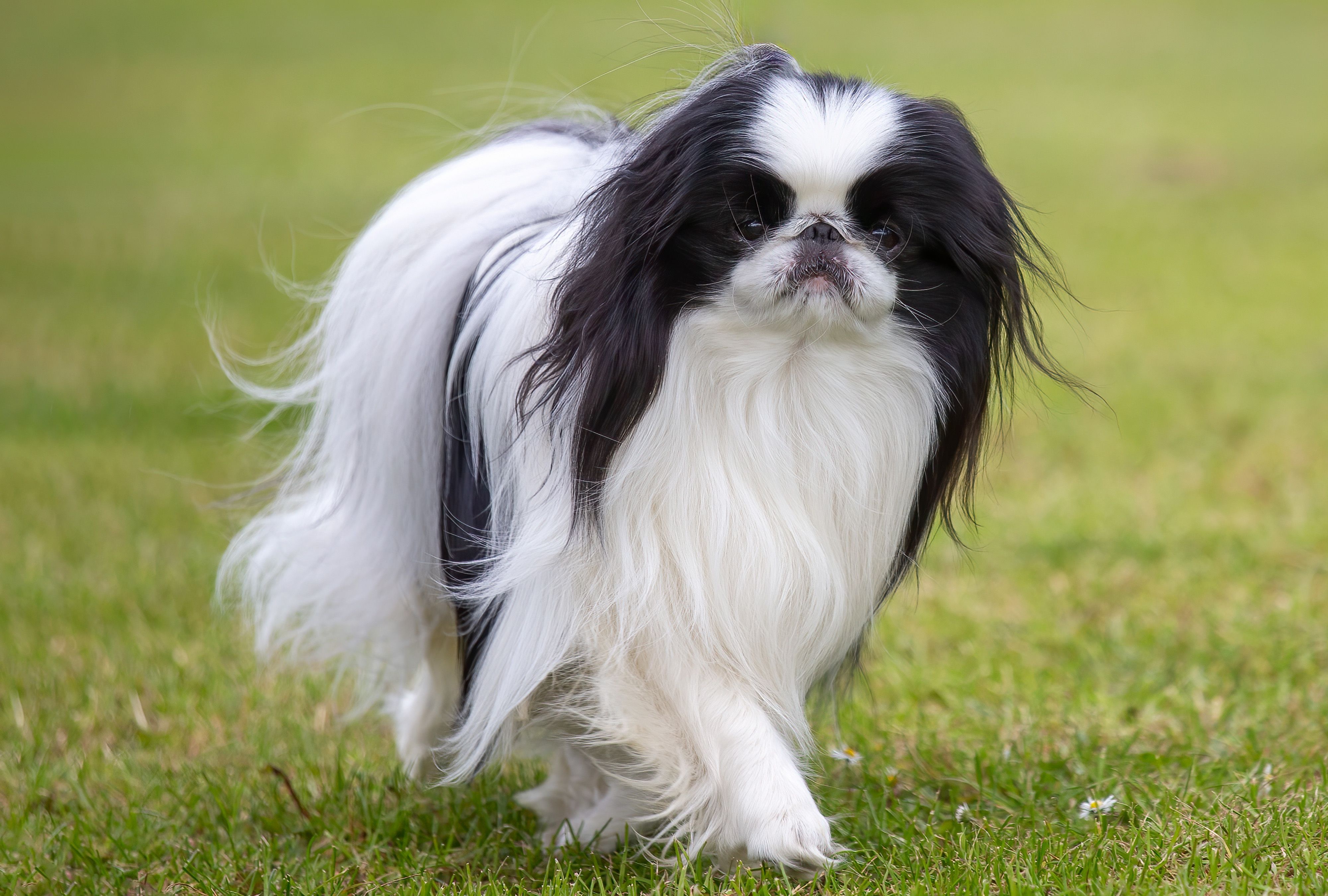
A small, elegant toy dog with a flat face, large round dark eyes, and a luxurious silky coat. Distinctive patterned coat in black-white or red-white. Broad head, short nose, and small folded ears. Plumed tail carried over the back.
Temperament
Cat-like, elegant, and independent. Japanese Chin are unique among toy breeds for their feline qualities—they wash their faces with their paws, perch on high surfaces, and have an aloof dignity. Quiet and refined.
Personality Around Others
Devoted to family but cat-like in independence. Good with gentle people. Reserved with strangers. Prefer calm environments.
Exercise Needs
Very low exercise needs. Short walks and indoor play. Content with minimal activity. Not outdoor adventure dogs.
Training
Intelligent but cat-like independence. Gentle methods. They learn what they want to learn. Sensitive to corrections.
Grooming
Regular brushing to prevent tangles. Silky coat is relatively easy to maintain. Clean facial area. Regular dental care.
Health
Common Health Conditions
Heart issues and brachycephalic respiratory concerns are the main health considerations. Generally healthy for a toy breed.
Recommended Health Tests
- Cardiac Exam
- Patellar Evaluation
- Ophthalmologist Evaluation
Average Annual Vet Cost
$500-$1,000
Nutrition
Quality toy-breed food. Small portions. Light eaters. Monitor weight.
Living Environment
Perfect apartment companions. Quiet, clean, cat-like. Don't need a yard. Indoor dogs.
Ideal Family
Calm households. Those who appreciate cat-like qualities in a dog. Seniors wanting a quiet companion.
Intelligence
Intelligent with cat-like independence. They choose what to learn. Quick minds but selective obedience.
Barking
Frequency
Alert
Separation
Quiet Indoors
One of the quietest dog breeds. Rarely bark. Very dignified and composed.
Shedding
Year-Round
Seasonal
Vacuum Factor 🧹
Hypoallergenic
Moderate shedding. Silky coat is manageable with regular brushing.
Weather Tolerance
☀️
Heat
❄️
Cold
🌧️
Rain
🌨️
Snow
💧
Humidity
Breed Ratings
Fun Facts
Often called the most cat-like dog breed—they wash their faces with their paws
Were exclusive to Japanese royalty for centuries
Commodore Perry introduced them to the Western world in 1853
They perch on high surfaces like cats
Known as Chin in Japan, meaning royal
Famous Dogs
Commodore Perry's Chins
The first Japanese Chin brought to the West, given as gifts from the Japanese emperor in 1853
Common Myths
"They're from China, not Japan"
While they may have Chinese origins, they were developed and refined in Japan for centuries
"They're just like other toy spaniels"
Japanese Chin are unique—more cat-like and independent than any other toy breed
Frequently Asked Questions
Why are they called cat-like?
They wash faces with paws, perch on furniture backs, and have an independent, dignified personality like cats.
Are they quiet dogs?
Very quiet—one of the least vocal dog breeds. Perfect for apartments and quiet households.
Puppy Guide
Chin puppies are delicate and refined. Handle gently. Socialize carefully. They bond quickly.
Senior Care
Senior Chins are calm and devoted. Heart monitoring important. Very gentle exercise.
Ownership Costs
Estimated Lifetime Cost
$11,000-$16,000
Pros and Cons
Pros
Extremely quiet
Cat-like independence
Great apartment dog
Elegant appearance
Low exercise needs
Cons
Fragile
Reserved with strangers
Not good with rough children
Brachycephalic issues
Moderate shedding