
Rottweiler
También conocido como: Rottie, Rott, Rottweil Metzgerhund
Nivel de Energía
Apto Apartamento
Peso (Macho)
95–135 lbs (43–61 kg)
Altura (Macho)
24–27 inches (61–69 cm)
Datos Rápidos
Colores de Pelaje
Resumen de la Raza
El Rottweiler es un perro de trabajo poderoso y seguro de sí mismo, con un corazón tan grande como su musculosa estructura. Criado originalmente como conductor de ganado y perro de carnicero en la ciudad alemana de Rottweil, esta raza ha evolucionado hasta convertirse en uno de los principales perros guardianes y de compañía del mundo.
Bajo su imponente exterior se esconde un miembro de la familia notablemente afectuoso, leal e incluso juguetón. Los Rottweiler bien criados y socializados son perros tranquilos y seguros de sí mismos que crean un vínculo profundo con sus familias y se toman en serio sus tareas de protección sin ser innecesariamente agresivos. Son la encarnación del "gigante gentil" cuando están con sus seres queridos y un elemento disuasorio formidable para cualquiera con malas intenciones.
Los Rottweiler requieren dueños experimentados, un entrenamiento constante y una socialización exhaustiva desde cachorros. En las manos adecuadas, son compañeros magníficos: leales, fáciles de entrenar y eternamente devotos. En las manos equivocadas, su tamaño y fuerza pueden convertirse en un problema.
Historia
La ascendencia del Rottweiler se remonta a los antiguos perros de pastoreo romanos que acompañaban a las legiones a través de los Alpes, guiando al ganado que alimentaba a las tropas. Cuando los ejércitos romanos se establecieron en el sur de Alemania alrededor del año 73 d.C., sus perros se cruzaron con los perros locales en lo que se convertiría en la ciudad de Rottweil.
Durante siglos, los Rottweiler sirvieron como conductores de ganado, tiradores de carros y guardianes de las bolsas de dinero de los carniceros (atadas al cuello del perro para mayor seguridad). La raza se ganó el nombre de "Rottweil Metzgerhund" (Perro de carnicero de Rottweil).
La raza estuvo a punto de extinguirse a mediados del siglo XIX, cuando el transporte de ganado fue reemplazado por los ferrocarriles. El trabajo policial y militar salvó a la raza del olvido, y el AKC reconoció al Rottweiler en 1931. La raza experimentó un enorme aumento de popularidad en la década de 1990, alcanzando el puesto #2 en los registros del AKC, aunque la cría irresponsable durante este período dañó la reputación y la salud de la raza.
Apariencia
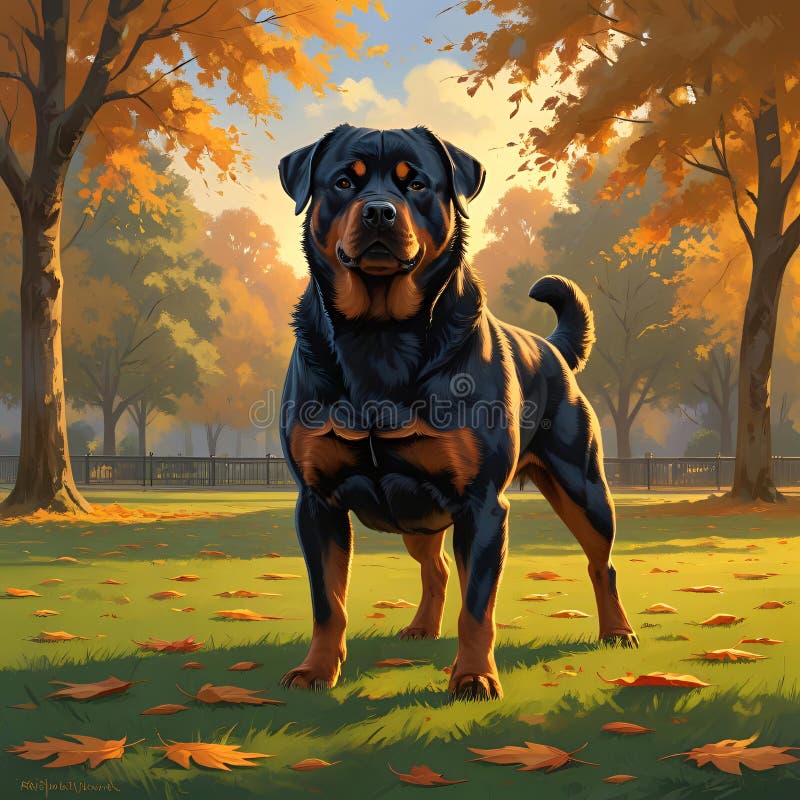
El Rottweiler es un perro de tamaño mediano-grande, robusto y poderoso, con una constitución compacta y sólida. Los machos miden 24-27 inches y pesan 95-135 pounds; las hembras miden 22-25 inches y pesan 80-100 pounds. El cuerpo es ligeramente más largo que alto, con un pecho ancho, cuello musculoso y una espalda fuerte y recta.
La cabeza es ancha con un stop bien definido, mandíbulas fuertes y una expresión alerta y noble. Los ojos son de color marrón oscuro, en forma de almendra, y transmiten inteligencia y una confianza tranquila. Las orejas son de tamaño mediano, triangulares y colgantes.
El pelaje es corto, denso y liso, con una capa interna en el cuello y los muslos. El único color aceptado es el negro con marcas bien definidas de color óxido a caoba en las mejillas, el hocico, el pecho, las patas y sobre los ojos.
Temperamento
Los Rottweiler son perros tranquilos, seguros de sí mismos y valientes, con un instinto de guardia natural que no requiere entrenamiento formal para activarse. Son profundamente devotos de sus familias; muchos dueños los describen como "perros falderos de 100-pound" que insisten en la cercanía física. Su lealtad es legendaria y se extiende a todos los miembros de la familia, incluidos los niños.
A pesar de su reputación de duros, los Rottweiler bien socializados son notablemente amables e incluso juguetones. Tienen un lado cómico y payaso que revelan a sus personas de confianza: cabezazos, reverencias de juego y los entusiastas "Rottie rumbles" (una vocalización única entre un ronroneo y un gruñido que expresa satisfacción).
Con los extraños, los Rottweiler mantienen un comportamiento vigilante y reservado. Evalúan las situaciones antes de reaccionar; esto no es agresividad, sino discernimiento. Un Rottweiler bien criado nunca debe ser nervioso, temeroso o innecesariamente agresivo. La confianza es el sello distintivo de la raza.
Personalidad con Otros
Los Rottweiler con los niños suelen ser pacientes y protectores. A menudo asumen el papel de guardianes, colocándose entre los niños y las amenazas percibidas. Sin embargo, su tamaño requiere supervisión cerca de niños pequeños. Con otros perros puede ser un desafío: los Rottweiler pueden ser dominantes y es posible la agresión hacia perros del mismo sexo. Una socialización temprana y exhaustiva es esencial. Pueden aceptar a los gatos si se crían juntos. A los extraños se les observa y evalúa: los Rottweiler no entran en confianza rápidamente, pero no son hostiles con las visitas bienvenidas.
Necesidades de Ejercicio
Los Rottweiler necesitan de 60-90 minutes de ejercicio diario. Son perros de trabajo que requieren estimulación tanto física como mental. Los paseos estructurados, las sesiones de entrenamiento, la natación y el juego interactivo los mantienen equilibrados. A pesar de su tamaño, muchos Rottweiler disfrutan del agility. La estimulación mental a través del entrenamiento de obediencia, los juguetes de rompecabezas y el trabajo de olfato es crucial. Los Rottweiler que no se ejercitan lo suficiente pueden volverse destructivos y desarrollar problemas de comportamiento.
Entrenamiento
Los Rottweiler son muy fáciles de entrenar con los métodos adecuados. Responden mejor a un liderazgo seguro y constante utilizando el refuerzo positivo. La socialización durante las semanas 8-16 es CRÍTICA; esta ventana de tiempo moldea la respuesta del perro adulto hacia los extraños, otros animales y situaciones nuevas más que cualquier otro factor. El entrenamiento de obediencia debe comenzar de inmediato y continuar durante toda la vida del perro. Los métodos de entrenamiento severos son contraproducentes, creando un perro temeroso o agresivo. Los Rottweiler necesitan un guía que sea firme pero justo, nunca cruel.
Aseo
El aseo del Rottweiler es relativamente fácil. Cepíllelo semanalmente con un cepillo de cerdas o un cepillo de goma para muda. Mudan de pelo moderadamente durante todo el año, con una muda más intensa en primavera y otoño. Baño cada 6-8 weeks. Cuidado dental (cepillado 2-3 veces por semana), limpieza de oídos (semanal) y corte de uñas (cada 2-3 weeks). La raza tiene un olor mínimo y generalmente es limpia.
Salud
Condiciones Comunes
Los Rottweiler están predispuestos a varias afecciones graves. El cáncer, particularmente el osteosarcoma, es la principal causa de muerte. La displasia de cadera y de codo son problemas ortopédicos comunes. Las afecciones cardíacas, especialmente la estenosis aórtica, requieren detección. La torsión gástrica es una emergencia potencialmente mortal en esta raza de pecho profundo. Las lesiones del ligamento cruzado ocurren con frecuencia debido a su estilo de vida activo y su constitución pesada. La cría responsable con pruebas de salud exhaustivas reduce significativamente el riesgo.
Pruebas de Salud Recomendadas
- Evaluación de Cadera (OFA)
- Evaluación de Codo (OFA)
- Examen Cardíaco
- Evaluación Oftalmológica
- Prueba de ADN para JLPP
Costo Veterinario Anual Promedio
$600–$1,200
Nutrición
Los Rottweiler adultos necesitan de 2,000-2,500 calorías diarias, dependiendo de su nivel de actividad. Los alimentos de alta calidad y ricos en proteínas favorecen su constitución musculosa. Aliméntelo dos veces al día para reducir el riesgo de torsión gástrica; evite el ejercicio 30 minutos antes y después de las comidas. El alimento para cachorros de razas grandes es esencial para un crecimiento controlado. Evite la sobrealimentación, ya que el exceso de peso ejerce presión sobre las articulaciones y empeora la displasia. Los suplementos para el soporte articular (glucosamina, omega-3) son beneficiosos a partir de la edad adulta.
Entorno de Vida
Los Rottweiler necesitan una casa con un patio cercado de forma segura, con una valla de mínimo 6-foot. No son perros para apartamento debido a su tamaño y necesidades de ejercicio. Se adaptan a varios climas pero prefieren temperaturas moderadas. Su doble pelaje soporta bien el frío, pero pueden sobrecalentarse con el calor extremo. Son perros de interior que deben vivir con su familia; aislar a un Rottweiler en un patio trasero genera problemas de comportamiento.
Familia Ideal
Los Rottweiler son ideales para dueños de perros experimentados que brinden un liderazgo constante, una socialización exhaustiva y ejercicio diario. Las familias activas con niños mayores (de 8 años en adelante) pueden tener experiencias maravillosas con los Rotties. Los solteros y las parejas dispuestos a invertir en entrenamiento encontrarán un compañero ferozmente devoto. NO es ideal para: dueños primerizos, guías pasivos, apartamentos o cualquier persona que no pueda comprometerse con una socialización exhaustiva.
Inteligencia
Clasificado en el noveno lugar en inteligencia canina, los Rottweiler aprenden rápido y pueden dominar nuevos comandos en 5-15 repeticiones. Su inteligencia de trabajo es sobresaliente: sobresalen en obediencia, rastreo, pastoreo y trabajo de protección. Su capacidad para resolver problemas es fuerte y tienen una excelente memoria. A diferencia de algunas razas inteligentes, los Rottweiler están ansiosos por trabajar con su guía en lugar de hacerlo de forma independiente, lo que los hace muy fáciles de entrenar cuando están debidamente motivados.
Ladrido
Frecuencia
Alerta
Separación
Silencio Interior
Los Rottweiler no ladran en exceso. Son perros tranquilos que ladran con un propósito: para alertar o cuando algo anda realmente mal. Su ladrido profundo y poderoso es imponente y eficaz como elemento disuasorio. Por lo general, son silenciosos en el interior.
Muda de Pelo
Todo el Año
Estacional
Factor Aspiradora
Hipoalergénico
Los Rottweiler mudan de pelo moderadamente con aumentos estacionales. Su pelaje corto y denso produce una muda notable pero manejable. El cepillado regular lo mantiene bajo control. Mudan menos que muchas razas de doble pelaje.
Tolerancia Climática
☀️
Calor
❄️
Frío
🌧️
Lluvia
🌨️
Nieve
💧
Humedad
Calificaciones de la Raza
Datos Curiosos
Los Rottweiler estuvieron entre las primeras razas utilizadas como perros policía a principios del siglo XX.
Los antiguos ejércitos romanos utilizaban a los ancestros del Rottweiler para pastorear el ganado que alimentaba a sus legiones.
Los carniceros de Rottweil ataban sus bolsas de dinero alrededor del cuello de su Rottweiler para mantenerlas a salvo.
Los Rottweiler hacen un "Rottie rumble" único, un gruñido bajo y ronroneante que expresa satisfacción.
La raza estuvo a punto de extinguirse a mediados del siglo XIX antes de ser salvada por el trabajo policial.
Los Rottweiler tienen una de las fuerzas de mordida más fuertes: 328 PSI.
A pesar de su imagen de duros, muchos Rotties son perros de terapia certificados.
Un Rottweiler llamado Stinky ganó el Premio AKC a la Excelencia Canina por su trabajo de terapia.
Perros Famosos
Stinky
Perro de terapia galardonado que trabajó con niños traumatizados
Wynd
Uno de los primeros perros guía Rottweiler para ciegos
Jake
Perro de búsqueda y rescate Rottweiler que sirvió en el atentado de Oklahoma City
Mitos Comunes
"Los Rottweiler son intrínsecamente peligrosos y agresivos."
Los Rottweiler bien criados y socializados son tranquilos, seguros de sí mismos y gentiles con sus familias. La agresión suele ser el resultado de una mala cría, falta de socialización, abuso o tenencia irresponsable.
"Los Rottweiler tienen "mandíbulas que se traban"."
Ninguna raza de perro tiene un mecanismo de mandíbula que se trabe. Los Rottweiler tienen una mordida fuerte, pero sus mandíbulas funcionan de manera idéntica a las de todos los demás perros.
"Los Rottweiler se vuelven contra sus dueños."
Esto es completamente falso. Los Rottweiler se encuentran entre las razas más leales y crean un vínculo profundo con sus familias.
"Los Rottweiler no son buenos con los niños."
Los Rottweiler bien socializados son excelentes perros de familia, gentiles y protectores con los niños. Como con cualquier raza grande, se recomienda la supervisión.
Preguntas Frecuentes
¿Son los Rottweiler buenos perros de familia?
¡Sí! Los Rottweiler bien socializados son leales, protectores y gentiles con sus familias. Necesitan dueños experimentados que les proporcionen entrenamiento y socialización.
¿Son agresivos los Rottweiler?
No de forma intrínseca. La agresión en los Rottweiler casi siempre es causada por una mala cría, una socialización insuficiente o el abuso. Los Rotties bien criados y entrenados son tranquilos y seguros de sí mismos.
¿Cuánto ejercicio necesita un Rottweiler?
De 60-90 minutes de ejercicio diario que incluya paseos, juegos y estimulación mental.
¿Son los Rottweiler fáciles de entrenar?
Muy fáciles de entrenar con los métodos adecuados. Responden mejor a un refuerzo positivo constante y seguro. No se recomiendan para entrenadores pasivos o sin experiencia.
¿Se llevan bien los Rottweiler con otros perros?
Variable. Con una socialización adecuada, muchos Rotties coexisten pacíficamente. Algunos pueden ser dominantes, especialmente con perros del mismo sexo. La socialización temprana es clave.
Consejos de Adopción
Los refugios de rescate específicos de Rottweiler evalúan el temperamento cuidadosamente. Haga preguntas detalladas sobre el historial del perro con niños, otros animales y extraños. Muchos Rotties rescatados son entregados debido a su tamaño y desafíos de entrenamiento, no por agresividad. Las pruebas de temperamento son esenciales antes de la adopción. Considere Rotties adultos (de 2-5 años) que ya hayan demostrado un temperamento estable.
Guía de Cachorro
Los cachorros de Rottweiler crecen rápidamente: de 1 pound al nacer a más de 95+ pounds al año de edad. La socialización durante las semanas 8-16 es CRÍTICA para esta raza. Expóngalo a más de 100 personas antes de las 16 semanas. El alimento para cachorros de razas grandes evita un crecimiento demasiado rápido. Manipule sus patas, orejas y boca a diario. Establezca el liderazgo mediante un entrenamiento positivo de inmediato. Evite ejercitar en exceso las articulaciones en crecimiento; siga la regla de "5 minutos por mes de edad" para los paseos.
Cuidado de Adulto Mayor
Los Rottweiler envejecen relativamente rápido, con una esperanza de vida de 9-10 años. La detección del cáncer es esencial: controle cualquier bulto o cojera. Suplementos articulares a partir de los 5-6 años. Mantenga un ejercicio moderado. Las camas ortopédicas brindan soporte a las articulaciones envejecidas. Visitas veterinarias semestrales con análisis de sangre y exámenes físicos. El enriquecimiento cognitivo a través del entrenamiento ayuda a mantener la agudeza mental. Esté atento a los problemas cardíacos; se recomienda un examen cardíaco anual.
Razas Similares
Doberman Pinscher
Constitución más estilizada, más atlético, energía ligeramente más alta. Instintos protectores similares pero más orientado a las personas.
German Shepherd
Perro de trabajo más versátil con mayor energía. Lealtad similar pero constitución más atlética.
Cane Corso
Temperamento de guardián similar con ascendencia de mastín italiano. Más independiente y reservado.
Bullmastiff
Guardián más grande y tranquilo. Menos activo pero igualmente protector.
Costos de Propiedad
Costo Estimado de por Vida
$15,000–$25,000
Pros y Contras
Ventajas
Ferozmente leal y devoto de la familia
Excelente guardián natural, no necesita entrenamiento de ataque
Altamente inteligente y fácil de entrenar
Temperamento tranquilo y seguro de sí mismo
Bajas necesidades de aseo
Tranquilo en el interior, no ladra por molestia
Robusto, poderoso y atlético
Gentil y afectuoso con los miembros de la familia
Desventajas
Requiere un dueño experimentado y seguro de sí mismo
La socialización exhaustiva es obligatoria
Propenso al cáncer con una esperanza de vida más corta
Puede ser dominante con otros perros
Desafíos con seguros y responsabilidad civil en algunas áreas
Su gran tamaño requiere espacio y recursos
Riesgo de displasia de cadera/codo
Puede aplicarse alguna legislación específica de la raza